Monday, December 2, 2024

Feast to Francis Xavier

Today, we in India celebrate the solemnity of Saint Francis Xavier, patron of missionaries, who brought the light of Christ to our forefathers. This year is very particular because his body is kept out for public veneration, it was done during a decennial exposition in Goa, India in 1964. 

In the Office of the Day, the second reading presents a letter written by Saint Francis Xavier to Saint Ignatius, his Superior General. Through this letter, we glimpse the context of our country during his time of deep poverty, illiteracy, and the many challenges the Saint faced in his mission; 

The world in which Saint Francis Xavier lived was very different from ours. At that time, the Church taught that salvation was possible only within its fold, making evangelization its primary mission. The focus was that through teaching the basics of faith: the Creed, Our Father, and the Hail Mary. Today, the Church has a broader understanding, recognizing God’s presence and revelation in different ways and faith traditions. Evangelization now emphasizes living as witnesses to Christ, reflecting the teaching that “time is greater than space” (cf. Evangelii Gaudium).

The coastal areas were full of Parava communities where the community of fishermen who had suffered persecution and were eager for the protection of Portughese. He faced a language barrier, and lack of formal church structures. He wanted to gather the children first, ringing a small handbell to attract attention. the sound drew children and villagers out of their homes about man of God. 

Religious fundamentalism and Hinduism was very strong in those places. In Saint Francis Xavier’s time, the mission was about baptizing thousands. Today, such methods are neither feasible nor appropriate. Religious fundamentalism dominates many spheres, making public proclamation of Jesus difficult, even dangerous. Anti-conversion bills are passed, you will be arrested if you proclaim the religion publicly.

Francis desired to go to India when no missionaries knew well of all the commodities and challenges. His passion to live the Gospel in the midst of inconveniences. 

So, we cannot simply conclude that we must be missionaries like Saint Francis Xavier. Times have changed. Today, Christianity faces challenges of relevance and survival. Through initiatives like the Synod and the call to journey together as brothers and sisters, the Church seeks new ways to engage with the world and remain faithful to the Gospel.

As we honour Saint Francis Xavier and flock to see his sacred relics, let us seek his intercession. May his example inspire us to live as joyful witnesses of Christ in our own time.

Thursday, November 7, 2024

Dishonest servant (Luke 16:1-13)

Luke 16:1-13 the parable of the unjust/dishonest steward, It has been considered the most controversial and confusing teaching in the NT. It is a challenging parable to understand the right explanation of the author. The parable is about a rich man who calls his dishonest steward to remove him from his job for his dishonesty, but he reduces the debts of the master’s servants and he is praised by the master for his prudence and wisdom. What is the teaching of Jesus here? How can we understand the intention of the author through this parable? 

a. To be wise and prudent to do good, not only honest and truthful: in the parable, the master hears about the stewards’ dishonesty, he did not catch him while he stole the money, he did not investigate also, he hears about dishonesty from someone. but most of the time, the gossip travels faster, rather, the steward acknowledges and continues to forgive the debts of the debtors using the wealth of the master.

b. Using the means to achieve the end, Prioritizing eternal values: We need to differentiate means from ends and this requires discernment. We have so many means in our life; Resources, property, responsibilities, knowledge-studies, and relationships are not end in themselves but are means to reach a greater purpose—such as the Kingdom of God, heaven, or God Himself. Here, forgiveness is the goal, using the money of the master, he achieves a good name, and he wants to be generous by applying the wealth of the master. 

c. In all the parables of Luke, the rich people are condemned, they cannot enter the kingdom of God, because the Poor in Luke are not only in spirit but also poor in economic condition. We listen to some politicians, abusing state resources. The parable is not about abusing the resources, or some people ‘manipulating’ the resources for our self-interest and growth.


Wednesday, November 6, 2024

Washing the Feet of the Disciples (John 13)

WASHING OF THE FEET OF THE DISCIPLES

1. Act of intimacy/closeness/passionate relationship:  

Foot washing always was considered as an act of humility, because in the Jewish culture, it was the work of the slaves/household to wash the feet of the guests before the meals. But more than this traditional interpretation there is a recent interpretation by modern scholars, the washing of the feet is one of the important gestures through which Jesus shows intimate passion with the disciples. (Who else in the scripture, washed the feet of Jesus?) In Lk 7, it was a public meal where scribes and Pharisees were at the table. Jesus’ feet is washed by a prostitute, (while Jn 13, she was Mary, sister of Lazarus) sitting behind Jesus with her hair unbound, brought a flask of an expensive perfume, weeping she began to wet his feet with her tears, washes his feet and wiped them with the hair, and kissed his feet. (Lk 7:37-38)

 The scene of the evangelist Luke is like an adult’s only movie. The woman with hair unbound is unthinkable in the common places. Because the Head covering was the biblical rule, not only in the synagogue but also in the common gatherings. Even in Talmud, the rabbis define hair as sexually erotic (ervah) and prohibit men from praying in sight of a woman’s hair. That is why you can never see a Jewish woman publicly dissolve her hair in public. According to the Semitic law, a woman can lose her hair unbound only in two cases, if she is a prostitute or she can only do it when she is having intimate relationship between a man and a woman. It shows the strong intimacy between Jesus and that woman. 

The event of woman washing the feet of Jesus was big scandal for the scribes, not because Jesus was found with the woman. Because, It is a deeply passionate sign between two people in intimacy. She is touching the feet of a master, all the more she is kissing one of the sensible part of the body, feet. 

  Here in Jn 13, Jesus performs the washing of the feet to reveal an intimacy with the disciples before the passion and death. Here the relationship is singular, reciprocal and profound. 

2. It is a gesture of service: 

  According to the synoptic, Jesus is in Jerusalem (upper room) for the Passover meal. Usually when you attend the Passover meal, you should dress well, the disciples are dressed well in their best. But Jesus removed his outer robe/garment, and wore a towel at his waist. A dress of humiliation on the day of Pass over meal. 

  Jesus rose from supper, removed his outer garments, and took a towel. Then he poured water into a basin, and began to wash the disciples' feet, and to wipe them with the towel with which he was girded. (Jn 13:4-5) the same transitional verbs are repeated by Lk 10, in the Good Samaritan, He went to him and bound up his wounds, pouring on oil and wine; then he set him on his own beast and brought him to an inn, and took care of him. (Lk 10:34). (water & basin – wine /oil, wipes with a towel – wraps the bounds) Jesus in a sense not only washing the feet, but healing the hearts of the disciples against egoism and individualism. There are many similarities in the exegetical analysis of both the passages. 

  Why towel? To wipe out the legs wet. Jesus could carry very well on the shoulder? Why to wrap it around the waist? Wrapping it around his waist: it is very typical and symbolic visible sign of the attitude of the service. (the first time, “after the sin of first parents, their eyes were opened, they knew that they were naked; and they sewed fig leaves around the waist and made themselves aprons. (Gen 3:7). After the sin the parents felt they lost the divinity, they enter into the world of work and suffer. … You tie anything on your hips that is an attitude of the service is also. You are ready to do something. Peter does not understand what his teacher does. 

Once again, typical narration of John, Jesus is speaking metaphorically, whilst Peter is taking him literally, just as Nicodemus and Samaritan (Jn 3.4). till now the words of Jesus were misunderstood, but for the first time action of Jesus is misunderstood by Peter. 

  • That which I am doing, You do not know (oida) now
  • but you will know (gnose) after these things.  (Jn 13:7 NJB)
  • you do not know now, you will realize after the passion, death and resurrection. 

During the miraculous fishing scene? The disciple whom Jesus loved said to Peter, 'It is the Lord.' At once, Simon Peter tied his outer garment around him (for he had nothing on) and jumped into the water. (Jn 21:7) Peter hardly knows that it was the Lord, he wraps his garment around his hip, and threw himself into the sea. (Jn 21: 7). Peter does not understand him before the passion, during the passion; He understands it only after the resurrection. You cannot understand the importance of the washing of the feet of your neighbor unless you encounter the passion, death of our Lord Jesus. Peter denied Jesus, wept bitterly and then participated in the passion. He looked at the death (empty tomb), felt the resurrection. Now it is time to serve. 

  Jesus is recalling the language of ‘having a bath’ refers three kinds of bath. One is the common practice of bathing before a meal. Second one is Jewish ritual washing, in a mikveh, which was then adapted to the Christian practice of baptism. Bath by head is the must one for all the Christians. The disciples were baptized. The third one is a necessary baptism, bath by feet (Saint Augustine and Cyprian associate). During the bath by head, you are regenerated in the Church. During the bath by feet, you participate in a communion, purifying. In fact, unless we allow Jesus to wash our feet, we cannot wash the feet of others. Jesus is the source of eternal water, washes your head, and feet.

3. It is a gesture of communion: “If I do not wash you, you have no part in me”. In the Gospel of John, the washing of the feet is a symbol of perfect communion and full sharing. So it is not enough to simply follow, but we enter into a relationship of sharing (you also ought to wash one another's feet). It is a service aimed at communion cannot be closed in itself. We become a family who wash their feet one and all. 

  Why Peter? Peter was embarrassed, one thing he did not leave Jesus to wash his feet, out of respect. Just before this scene in the Gospels, the disciples had been arguing about who was the greatest disciple. In an atmosphere of competing for power, position and importance it was hardly likely that any of them would do such a lowly task as wash each others’ feet. No doubt they would have wanted to wash Jesus' feet but not each others, unless, of course, for a special friend. But Jesus moved to wash each one of their feet. (It is easy to wash the leper’s feet, but difficult to wash your superior’s feet)

There is a communion without any preference. Jesus had a preference for 2 disciples (Peter and John). But this preference is not closed or exclusive in the washing of the feet. He does not wash the feet only of the disciples, but also at the feet of Judas, a friend who betrays and at the feet of Peter who will betray him shortly. The most visible sign of the washing of the feet is the perfect communion. Look at the logo; Jesus is looking at the feet without looking at the face, while Peter looks nothing but the face of Jesus. Our religious style of service is without looking at the volt of preference. He washed them preferring, preferred them without excluding.

There is a difference between the Christian community and the social services and volunteers doing charity. Here is the difference, doing charity in communion. It is not necessary to be disciples of Jesus to serve others. The term communion comes from the term 'koinos' which means impure. Communion comes from the impure. The communion is nothing but the contamination (removing socks, touching the feet and washing). It is not a holy act, or pure act. How can we purify ourselves? By contaminating, purify yourselves. but purifies by contaminating oneself. A purification communion is not the process from purification to the communion process from communion to purification. To have communion not with gloves, but to enter the relationship without reserve, compromise. A communion is capable of not contaminating sin.

Washing of the feet is a Eucharistic gesture: The establishment of the Eucharist does not exist in the Gospel of John. (Because the last supper event gives meaning to the early Church, the Sacrament of Eucharist becomes fundamental for the Church and its life). God does not break himself in the bread, but he breaks himself at the table. While John does not tell the words of Jesus during the dinner, but he tells the Eucharist in action. It expresses what it says Eucharist. Jesus took bread, and blessed, gave thanks, and broke it, and gave to them, and said, Take and eat it: this is my body. 

Eucharistic table is the table of the word, but the washing of the feet is the table of charity. Eucharist is the mystery of transubstantiation (words of the celebrant). Both are no different. They are deeply related, one is reflected in the other. One can be seen in the other. One cannot be seen without the other. The non-separation between the Eucharist and charity. The Words of Jesus in the Mass; "This is my body given for you, this is my bloodshed for you." Kneeling is necessary for the veneration. But kneeling is indispensable for the washing of the feet. The body of Christ is an ecclesial body. Real communion. Worship and service are not separated rather they are one and the other linked closely. The Church has struck in between because of few scandals, but it is a call to move from worship to service, to move from service to worship. To take the Eucharist seriously is to begin to wash the feet of others, especially the feet of the poor. The Eucharist invites us to step down from pride, away from self-interest, to turn the mantel of privilege into the apron of service.

  John would respond with two means, love of God and love of neighbor. If anyone says, "I love God," and hates his brother, he is a liar; for he who does not love his brother whom he has seen, cannot love God whom he has not seen. (1Jn 4:20). Love for God passes through love of neighbor. Which is more important? According to John, both are important. Love for God is the engine for the other. Eucharist and basin /towel are the same. 

In the ecclesial horizon/context, the most identifying characteristic of the Church, is the Service. The in this gesture should recognize herself. Not only the Church, but any charism chosen by the Church must follow the ecclesial model. Peter will do the same gesture after the resurrection right in the ecclesial horizon and he who wraps the towel and throws himself into the water towards the risen Jesus and collects a huge network of fish. This means the content of the ecclesial collection. 


Luke 15:1-10

XXXI Week in Ordinary Time, Thursday

Philippians 3:3-8. Psalm 105:2-3, 4-5, 6-7. Luke 15:1-10

Have you ever experienced the Moment of feeling lost? you lost your passport or mobile phone; you lost yourself in the new place, and you are alone wandering. You experience hopelessness, insecurity and grief. But the Lord says this is the moment of growth. Sometimes, Being lost is the best way to find yourself! 

1. God’s unfailing love for the lost: In the Dictionary of the Bible, Losing means gaining. Paul says in his past, he lost everything, but now he found one thing, he gained the love of Christ. You have found the Lord who is too willing to lose 99 and take you the one who is lost. Jesus is identifying himself with the lost sheep, That “one” might be Christ or even our truest selves. In seeking, we lose ourselves—and in losing, we find ourselves.

2. The Joy of repentance and return: Luke’s Gospel is also called the gospel of Joy. The theme of joy runs throughout the GOpsel. Like the shepherd and the woman rejoicing over finding what was lost, heaven celebrates each person who returns to God, reminding us of the immense value of repentance. God rejoices when we find the purpose of our lives. we need to cultivate this joy of welcoming every sinner to paradise. 

3. Joy through spiritual suffering in order to know Christ’s suffering: This joy does not lie in making merry but through spiritual suffering. The Letter to the Philippians is known as "the letter of joy" because it is a message of rejoicing in Christ and spiritual joy: when this letter was written, Paul was imprisoned in Rome around 62. He is imprisoned but his letter is full of encouragement and hope for the future to those who are concerned in suffering. because his soul is completely free. 

Letting go of worldly gains and titles: Paul considers his past accomplishments ‘loss’ compared to knowing Christ, challenging us to re-evaluate what we hold valuable and pursue what draws us closer to GodThe supreme worth of knowing Christ: Knowing Christ surpasses all else; Paul’s example invites us to find our ultimate joy and purpose in a deep, personal relationship with Jesus.


Tuesday, October 22, 2024

Woe Sayings

A prophet’s frustrations

Jesus’ meal-scolding ends in today’s gospel reading. The host (a Pharisee) might have regretted having called Jesus for the dinner. Jesus used strong confrontations called ‘woe sayings’ in his preaching. Jesus has really ‘spoilt’ their dinner mood. 

How do we understand Jesus’ woes? How can we interpret these types of hard sayings from the Son of God? 

1. We should understand the context of the situation in which the evangelist wrote this gospel. In Early Christianity the Christians needed a fight to establish its identity amidst the institutionalised Jewish religion. The early Christians must have rubbed shoulders with the Pharisees, the Scribes, and the Teachers of the Law. This tension reflects in the woe-formulae.

The two woe texts in today’s gospel reading are addressed to two different groups: one, in general, and two, in particular, to the Teachers of the Law. The evangelist also writes in the end the reaction of the groups.

2. We can understand these woes as the prophet’s frustrations. A prophet, when his message is not received, vents out his feelings in the form of curses or woes. Jesus knew very well what awaited other prophets as well. He is heading towards the wall to hit it when he utters these curses. In other words, Jesus in a way kindles the anger of his enemies.

3. Expression of Jesus’ prophetic role. A prophet’s role is not only to announce but also to denounce. Jesus denounces the existing structures of his time. However, he knew that his message was not welcomed.

4. It is A call for repentance. By using harsh words, Jesus invites his audience to repent, to convert, or to change their ways of life.

5. A lesson for his disciples. Jesus indirectly exhorts his disciples not to imitate the Pharisees, the Scribes, and the Teachers of the Law.

What’s the lesson for us?

When we assume a prophetic role, we too may face frustrations. And we also learn that a prophet’s frustration invites us to change our course of life.

Sunday, October 6, 2024

Our Lady of Rosary

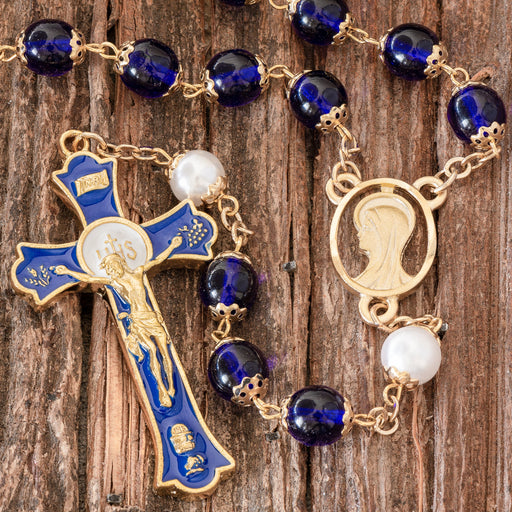
Have you seen any rosary beads without the cross? It would be strange to wear the rosary without the cross. We start the Holy Rosary with the cross and conclude with the cross. 

They tell the whole history of salvation is located between the images of two trees; the tree of knowledge that is found in the book of Genesis. The cross is made up of a wooden tree. 

The reason why Jesus died on a cross or a tree is that, in the very beginning, man stole from the tree, God put back on the tree for you and me to undo everything that was done in the beginning.

His hands are pierced because our hands stole from the tree.

Right his side is pierced because Eve came from the side, so he is making atonement for Eve one who led into temptation.     

Beautiful the role of the Mother beneath the cross, By her Yes and surrender, Jesus can accomplish salvation.  This moment of surrender is one of the mysteries we meditate on in the Rosary. 

Every time we recite the Rosary, we pray for the whole of humanity including the Church. The Rosary too brings us into this communal spirit of prayer, linking us with the Church around the world and throughout history. It reminds us that we are never alone in our prayers. Mary’s example teaches us that prayer is not just about speaking to God but about listening, discerning, and surrendering to His will.


Our Lady of Rosary (2024):

1. The rosary is a powerful prayer: 

it has been called the preparation for contemplation and the prayer of saints. While the hands and lips are occupied with the prayers (it can and should be prayed silently when necessary so as not to disturb others), the mind meditates on the mysteries of the Incarnation and Redemption represented by the decades. Not only movement of lips, manalangin mo kami makasalanan, mga intention of the holy rosary, Pope requests you to pray, intentions of Santo padre, “Say the Rosary every day to obtain peace for the world” (Our Lady of Fátima). “Among all the devotions approved by the Church none has been so favored by so many miracles as the devotion of the Most Holy Rosary” (Pope Pius IX). Miraculous rosary, Lourdes, Family rosary is an important, “How beautiful is the family that recites the Rosary every evening” (Pope John Paul II).

2. Rosary is a powerful weapon to fight against evil: 

Fight against satan, many call exorcists, exorcists prefer to carry rosary and crucifix, Saint Pio of Pietrelcina (Padre Pio) and many other saints and popes have called it “a glorious weapon against Satan.” So, when we pray the rosary we join our will with her will and with the will of millions of others who also pray the rosary. A  kind of spiritual chain is established, involving millions of Catholics all joined together in prayer, linking our wills with the will of the Blessed Virgin Mary, and all of us saying to God, “Thy Will be Done.”

This corporate act of the will establishes a powerful presence in the world and acts as a spiritual buffer and antidote to the poison of evil.

3. The Rosary is an instrument to reach heaven:

It can save you from going to Hell. After death, we can either go to Heaven, Hell, or Purgatory. But Hell, sadly, is the most tragic truth of suffering souls. Mary promises that if you pray the Rosary, she will help you become pure and holy so that you go to heaven.

A priest whom I know met with an accident, before going to ICU, wanted to carry the rosary, some keep it near the pillow, some dead bodies have the rosary in their hand, 

Historical Event: 
For the people of that time, there was absolutely no doubt that the victory at Lepanto had been the direct result of the intercession of the Blessed Virgin and her rosary. Saint Pope Pius V was so convinced that Our Lady's intercession had brought victory. He wished that the victory should be liturgically celebrated wonderfully throughout the catholic word every year. 

In March of 1572, Pope Pius V instituted the annual feast of our Lady of Victory, directing that it be celebrated every year on October 7, remembering the Battle of Lepanto. He didn't' stop there, though. In a document titled Salvatoris Domini, he granted a plenary indulgence to all those who, in addition to the feast of Mary. This annual commemoration became known as "Rosary Sunday". Religious communities tended to refer to it as the Toties Quoties, which literally means "as often as", deriving from the number of plenary indulgences that could be gained on that day "as often as" a person fulfilled the conditions. However, the most common title used for the indulgence was to call it the "Great Pardon of the Rosary". For centuries, this indulgence was one of the most ample indulgences ever offered by the Church. 

Initially, the Plenary indulgence for Rosary Sunday was only granted to members of the Confraternity of the Rosary, but it was later extended to all the faithful. The indulgence was praised and confirmed by many subsequent popes in official documents, including Pope Innocent XI in Nuper pro parte. 

The condition for gaining the indulgence consisted of the following: A catholic had to visit a Dominican church with a rosary altar anytime from 2 p.m. on the Saturday preceding the feast until sundown on Rosary Sunday; pray for the intentions of the Holy Father during each visit; and go to confession and receive Holy Communion. 

Thanks to Donald H. Calloway

Our Lady of Lourdes
Feb 11
Bernadette Soubirous was 14 years old when she received the first apparition of the Blessed Virgin Mary at Lourdes on February 11, 1858.

The apparitions of the Blessed Virgin Mary to children are significant in Catholic tradition because they emphasize themes of faith, prayer, repentance, and devotion, often conveyed through the innocence and purity of children. Some of the most famous Marian apparitions to children include:
1. Our Lady of Fátima (1917, Portugal) – Mary appeared to three shepherd children (Lucia, Francisco, and Jacinta), 
2. Our Lady of La Salette (1846, France) – Mary appeared to two shepherd children, Melanie and Maximin, 
3. Our Lady of Guadalupe to Saint Juan Diego, an indigenous man of the Chichimeca people, on December 9–12, 1531, in Tepeyac Hill (modern-day Mexico City, Mexico).

Why Did Mary Appear to Children? Not to Bishops, Priests, lay official men,
1. Innocence and Purity – Children are often seen as humble, open-hearted, and less influenced by skepticism, making them ideal messengers.
2. Faith and Trust – Their simplicity allows them to believe and convey messages without distortion or personal agenda.
3. A Call to All People – Messages given to children emphasize that holiness is accessible to everyone, not just religious leaders.

2. Mother is asking her to pray for the sinners. She reveals her name immaculate. 
The apparition of lacrimation refers to cases where statues or images of the Blessed Virgin Mary (or sometimes Jesus) are reported to shed tears, including human-like tears, blood, or oil. These events are often interpreted as a sign of Mary’s sorrow for humanity’s sins or as a call to prayer, repentance, and conversion.
Famous Cases of Marian Lacrimation:
1. Our Lady of Syracuse (1953, Italy) – A small plaster image of the Immaculate Heart of Mary in the home of a couple, Antonina and Angelo Iannuso, was seen shedding human tears. The Church later confirmed the phenomenon.
2. Our Lady of Akita (1973, Japan) – A wooden statue of the Virgin Mary reportedly wept 101 times in the presence of witnesses. 

According to messages associated with weeping statues, Mary cries because of:
• The sins of humanity (violence, loss of faith, immorality)
• Lack of prayer and devotion
• War, suffering, and disasters
• Disrespect for the Eucharist
• A call for repentance and conversion

Saturday, September 21, 2024

Wedding at Cana (Jn 2:1-12)

  Mary was invoked by our loving founder as Mother of Divine Providence, because he recognized in this image the tenderness of the provident Father and measureless love of a mother. This Guanellian Spirituality is well established in today’s Gospel of John. There is only place in the Gospel, an effective interaction between Jesus and his mother. Usually the Old Testament scripture was known for the father-son relationship. Here the relationship between the Mother and Son is explained vividly in few lines. I would like to show 3 aspects of Guanellian spirituality. 

1. Mother presenting a son: The first words of Mary according to John, v.3 When the wine was gone, the mother of Jesus said to him, “They have no more wine” (Οἶνον οὐκ ἔχουσιν). There is a Johannine touch in the text. She did not say, “There is no wine”. The presence of negative adverb, ouk – no more, the Jews had no more wine, as if they knew nothing about wine, manifest them the real wine. Here no article, after the miracle, there is an article (steward of the feast tasted the wine), the wine. 

  The narration is very implicit, six stone jars for the Jewish rites of purification, the strange mention of number six for John. There should be seven jars, of course, incomplete. (7 signs, 7 women, 7 Jewish feasts, 7 disciples speak). Seventh jar was Jesus himself produced the wine.  

  A widowed mother presents her son as a Messiah, a new wine to the world. Mother of Divine Providence expresses the providence of the Father, presents the newness of the Son. Jesus is the best expression of Providence. The centre of the Guanellian message is God’s Providence, offered and presented by a Mother. 

  Whoever venerates this mother divine providence should have the same spirit of prayer, “Providence was always with me. I was never afraid of debts or fearful for my life; Providence is our defense; thus, nothing should scare us. Even at present, in the midst of painful events, I am not afraid: Providence watches over us. Providence will be our friend if we put our love and trust in Her. (L. Guanella, La Divina Provvidenza, 1915, p. 85). 

  This “continuous” benevolence of the Father is Providence, the gift of a mother, saying, “God sees me. God provides for His children.” This abandonment in God the Father was for Fr. Guanella his experience of Providence.


2. Jesus presenting Mary: any Jewish woman has to undergo 3 different stages which Mary also underwent here. Mary as a woman, a virgin and finally mother. 

  Scipione from Gaeta who pictured this image in 16th century told about his painting, “one could feel in the picture, a moment of maternal ecstasy: one of those ecstasies that every woman experience when they bear a child. He has drawn not only a woman, but more than a woman, the virgin Mother God.” Look at the eye sight of Mary, dress (copioso manto), veil, gesture of her hand; the way carries a child like a Mediterranean woman of that time. 

  Jesus addressed Mary, woman, in greek, gune, in the vocative case, gunai. Twice he called Mary like that in John. At the cross, woman, behold your son. It is hardly being disrespectful or rude. We should not embarrass the way Jesus calls Mary woman, no mothers were called by the proper or common name. (Jesus called no other woman, woman). By calling woman, Jesus honors Mary. 

  Jesus presents the Jewish woman, invites for the new relationship in the culture, society. Mary becomes a new Eve of the humanity; The first Eve was also called "woman" (Gen. 2:22), became mother of the Church and God becomes an example of interculturality carrying together inculturation of faith and evangelization of culture. 


3. Mary presenting disciples: these were the last words of Mary do whatever he tells you.. The slogan of the 17th general chapter of St. Mary of Divine Providence. Fate quello che vi dira. Actually speaking mother Mary does not have the copy right for these words. There is an internal contact in the scripture. Gen 41:55. If u see the Septuagint translation, John has copied from Genesis. There were 7 years of terrible famine in Egypt, people had no bread, rice they were dying. The soldiers came to Pharaoh, the king of Egypt. He indicated Joseph and told the same words of Mary, do whatever he says to you. 

  Words of King Pharaoh and Mary were the act of trust that undergoes any vocational discernment, revealing perfect, implicit and cheerful obedience. That wedding at Cana was the sign of a larger banquet: that of God with humanity, where the Mother of Jesus has its important role to play with her sensibility to the culture and society where we live. We should be able to invite everyone as family of God, and especially to make family with our poor. In April 1886, a small group of sisters left for Como with few poor, to open the House of Divine Providence in Via Tommaso Grossi. Dear Sisters, you should have the same heart with strong faith and trust of Guanella when carrying on our simple works of charity.  

  Concluding this, I believe that wedding at Cana may be suitable for our Guanellian family, in its application and in its symbolism, through which we express our spirituality and mission. In the name of Fr. Superior, all the Confreres, brothers, I wish you a happy feast we shall be accompanied by Mary, mother of divine providence.

Today’s context is more different than Cana and Como. Mary, the first believer, help us all to discern the path that Jesus points to inculturate and live today the Guanellian charism with that faith and charity that characterized the founder's life. (4th Provincial Chapter). Let us not do what Indians say, Italians say, phil.. Do whatever he says. She who tells us Jesus and her Word as a sure guide helps us to welcome new innovations of spirit with which to interpret and live our charism today with total availability of faith, charity, enthusiasm and fidelity.

Not only in the moments of Joys, but also in the moments of sorrow, we invoke the mother of Providence, “I believe that this illness of mine was sent by God’s Providence for extraordinary graces upon the House; extraordinary suffering, extraordinary graces… Because I intercede to the Lord on behalf of the Institute and you, I do not desist to send fiery words to God! ... God will take care of you. Nothing is necessary here on earth. Providence will help you! Death! Paradise! In your hands, O Lord! … Let you all follow me by carrying out this program of life: Prayer and Suffering!”

(L. Guanella, La Divina Provvidenza, October 1915, p. 150)


Homily 2: on 12 Nov 2019

Everyone has a dream wedding. Marriage is an important milestone in the life of the common people. They wait for the day; whether it’s a simple civil wedding or an extravagant church wedding, you need one thing; Preparation. We are going to see a typical ancient traditional Filipino wedding, esp in the province during pre-colonial times. (used to take long days)  

1. Bridegroom: He is patrono of the wedding function. Traditionally the bridegroom’s family is responsible for the expenses, arrangement of the wedding. The grandparents act as the primary witnesses/ sponsors. The wedding dress is important for the marriage, they reveal the identity. (Remember a parable of the wedding feast, when the king came in to see the guests, he noticed a man there who was not wearing wedding clothes. (Mt 22:11) he had a reason because bridegroom’s family is responsible for the wedding dress of the participants). The parents of the bride are responsible for the traditional white gown of bride. Filipino barong (made of delicate pineapple fibers) is the suitable dress for marriage. 

During the wedding at Cana, the attention goes to the bridegroom, When the wine was gone, the mother of Jesus went to the bridegroom, “They have no more wine’. It should not be read, there is no wine. The presence of negative adverb, ouk – no more, the Jews had no more wine, as if they knew nothing about wine, manifest them the real wine. Here no article, after the miracle, there is an article (steward of the feast tasted the wine), the wine. 

Jesus is the real bridegroom of our Community, newness for this community, do not fast, enjoy with him and taste him. I remember another episode before the public ministry of Jesus, The disciples of the John the Baptist ask, why others fast, your disciples do not fast, How can the wedding guests fast, when there is bridegroom. Jesus said to them, "The wedding guests cannot fast while the bridegroom is with them, can they? As long as they have the bridegroom with them, they cannot fast. (Mk 2:19)

In the present time, there is a greater joy, urgent to contemplate, and taste the divine beauty. Will of God to make this marriage with this humanity, here that is why we cannot fast, we should not fast because it is the time of the wedding. Time to taste him and his gift of wine for the good of the marriage. Jesus is the best expression of Providence. 

2. Bride: The bride is an interesting figure in the wedding. She is not less to the bridegroom, she is the who follows the bridegroom, going to merge with him in his life. During the wedding, suspense is the arrival of the bride. The groom should always arrive before the bride; bride should come mamaya, otherwise it will be bad luck. She should be accompanied by the mother/father of the bridegroom. 

In the wedding at Cana, Mary presenting disciples and accompanies the disciples to the bridegroom: She says, Do whatever he tells you. There were six stood six stone water jars (Jewish tradition used for ceremonial washing), Jesus said to the servants, "Fill the jars with water"; so they filled them to the brim. The bride is following the bridegroom with trust and obedience. This act of mutual trust and obedience is not only necessary for the successful married life but also any vocational discernment, revealing perfect, implicit and cheerful obedience. 

A group of young consecrated women had founded a home in the village for the elderly and for abandoned children, with the support of the parish priest Fr. Carlo Coppini, who died earlier that year. The Providence showed them Fr. Guanella, priest of prejudice, “hot-head man!” But they trusted simply like the disciples believing the words of Mary. (included Clare and Marcellina Bosatta), Because of the trust, they shifted from Pianello to Como,  Dear Sisters, do not be afraid to trust with strong faith when carrying on our Guanella’s works of charity.  

3. Babaylan: The wedding was officiated by a babaylan, a tribal priest. The house of the babaylan was the ceremonial center for the nuptial. On the first day, the couple was brought to the priest's home, where the babaylan blessed them, while their hands are joined over a container of uncooked rice. On the third day, the priest would prick their chests to draw a small amount of blood, which will be placed in a container to be mixed with water. After announcing their love for each other three times, they were fed by the priest with cooked rice coming from a single container. Afterward, they were to drink the water that was mixed with their blood. The priest proclaimed that they were officially wed after their necks and hands were bound by a cord or, sometimes, once their long hairs had been entwined together. In lieu of the babaylan, the chief of the town may also officiate Filipino wedding. Priest is the bridge between bride and bridegroom. 

In Wedding at Cana, there is a presence of Babaylan, Mary, the figure of Mary is necessary for any disciple who wants to identify his Master, find and surrender to him. Mary decides the hour of mercy for Jesus and the disciples, she decides the whole miracle to be a sign within two words, V.3 and V. 5 are the, She tells Jesus, “There is no more wine”, turns to the disciples, say “Do whatever he tells you”. The bride and bridegroom need to keep a simple act of trust with the mother, who can perform the rite of unity.  

Mary was invoked by our loving founder as Mother of Divine Providence, because he recognized in this image the tenderness of the provident Father and measureless love of a mother. This Guanellian Spirituality is well established in today’s Gospel of John. There is only place in the Gospel, an effective interaction between Jesus and his mother. 

If you want to enjoy a faithful, lifelong relationship with Jesus, we need a mother, consoling, interceding and protecting. Whoever venerates this mother divine providence should have the same spirit of prayer, “Providence was always with me. I was never afraid of debts or fearful for my life; Providence is our defense; thus, nothing should scare us. Even at present, in the midst of painful events, I am not afraid: Providence watches over us. Providence will be our friend if we put our love and trust in Her. (L. Guanella, La Divina Provvidenza, 1915, p. 85). 

  This “continuous” benevolence of the Father is Providence, the gift of a mother, saying, “God sees me. God provides for His children.” This abandonment in God the Father was for Fr. Guanella his experience of Providence.

Concluding this, I believe that wedding at Cana may be suitable for our Guanellian family, in its application and in its symbolism, through which we express our spirituality and mission. In the name of Fr. Superior, all the Confreres, brothers, I wish you a happy feast we shall be accompanied by Mary, mother of divine providence.

Today’s context is more different than Cana and Como. Mary, the first believer, help us all to discern the path that Jesus points to inculturate and live today the Guanellian charism with that faith and charity that characterized the founder's life. Let us welcome new innovations of spirit with which to interpret and live our charism today with total availability of faith, charity, enthusiasm and fidelity.


Wednesday, September 18, 2024

Faith and humility go together! (Luke 7: 36-50)

 Faith is the ultimate virtue, 

The sinful woman in the Gospel and St. Paul in the first reading invites us to acquire a strong and unshakable faith through acts of humility. Faith and humility go together. Faith can never be expressed through pride. 

How a Sinful woman can possess this alabaster jar with fragrant ointment. A jar was often presented to a young woman by her parents as a gift to give her betrothed as a sign of commitment. It was also often used to anoint bodies for burial. It was designed to be broken open only once, with great intention. Probably lonely, she decided to use it as a precious gift, the pride of her family, which she applied with love and passion. 

How can we grand things? Greatness in faith comes through small acts of love and surrender, not through extraordinary achievements. Instead of performing grand things, we should focus on small acts of love, sacrifice and service. 

Paul was great in Corinth, but he says he is unfit to be called an Apostle, he feels guilt for what he did to the Church.   

Faith would bear fruit, only when we embrace humility. The Pride is like a thermite, it will make the essentials empty. 

Friday, September 13, 2024

Exalted vulnerability - Feast of the Exaltation of the Cross

The Feast of the Exaltation of the Cross, celebrated today, has deep historical and theological significance in the Christian tradition. It commemorates the discovery and veneration of the True Cross, upon which Jesus was crucified, as well as the broader theological meaning of the cross as the ultimate symbol of Christ’s victory over sin and death.

A. Historical Background

(1) Discovery of the True Cross: In the early 4th century, St. Helena, the mother of Emperor Constantine, embarked on a pilgrimage to Jerusalem. Around 326 AD, she is believed to have discovered the True Cross at the site of Jesus’ crucifixion, Golgotha. According to tradition, three crosses were found, and the one believed to be the True Cross was identified when a dying woman was healed after touching it.

(2) The Dedication of the Church of the Holy Sepulchre: After St. Helena’s discovery, Emperor Constantine ordered the construction of two basilicas on the site of the crucifixion and resurrection—one at Golgotha and the other at the site of Jesus’ tomb, now known as the Church of the Holy Sepulchre. The dedication of these churches in 335 AD marked the first celebration of the Exaltation of the Cross.

(3) The Recovery of the Cross from the Persians: In 614 AD, the True Cross was captured by the Persian Empire during an invasion of Jerusalem. It remained in Persian hands until 628 AD when the Byzantine Emperor Heraclius recaptured it. Tradition holds that Heraclius personally carried the cross back to Jerusalem, where it was again exalted and venerated.

The whole history of salvation is located between the images of two trees; the tree of knowledge that is found in the book of Genesis. The cross is made up of a wooden tree. 

The reason why Jesus died on a cross or a tree is that, in the very beginning, man stole from the tree, God put back on the tree for you and me to undo everything that was done in the beginning.

His hands are pierced because our hands stole from the tree, 

his feet were pierced because the first messianic prophecy involves the feet

right his side is pierced because Eve came from the side, so he is making atonement for Eve one who led into temptation,     

crown of thorns on his head why?

the curse of creation is that "By the sweat of your face you shall eat bread, till you return to the ground, for out of it you were taken; for you are dust, and to dust you shall return". the ground produces thorns and thistles, he is literally taking the curse on his head to reverse it and restore the blessing. 


C. Vulnerability on the cross

The paradox of the cross is that on it hangs our vulnerability.

(1) The cross is the symbol of vulnerability that provides healing: The first reading (Numbers 21:4-9) shows how the Israelites, bitten by serpents due to their lack of faith, are saved by looking at the bronze serpent lifted up by Moses. This foreshadows Christ’s own lifting up on the cross in John 3:13-17, where He is offered as a remedy for sin. Just as the Israelites found healing in something that seemed like a curse (a serpent), we find redemption through Christ’s crucifixion – a symbol of vulnerability and weakness. It is through this vulnerability that God’s love and mercy are exalted, as the very thing that looks like defeat becomes the instrument of salvation.

(2) The cross as the ultimate act of humility: In the alternative reading (Philippians 2:6-11), St. Paul tells us that Christ “emptied Himself, taking the form of a slave” and “became obedient to death, even death on a cross.” The cross reveals the vulnerability of God who chose to become one of us, suffer, and die for our sake. It is in this self-emptying love that Christ is exalted. His humility – descending into human frailty – becomes the path to glory, showing us that in our weakness, we too can share in His exaltation. True power is not in domination but in humble, sacrificial love.

(3) The cross as the path to new life: In the gospel reading, we hear the familiar words: “For God so loved the world that He gave His only Son.” The cross is the ultimate expression of this love – a vulnerable gift that brings eternal life to all who believe. The exaltation of the cross reminds us that vulnerability and suffering, when embraced with faith, lead to resurrection and new life. We are called to embrace our own crosses, trusting that God transforms our suffering and weakness into opportunities for grace and redemption.

The cross stands as a paradox of strength in vulnerability, victory in suffering, and life in death. It is a reminder that God’s greatest power is revealed in what the world sees as weakness. Through the exaltation of the cross, we are invited to follow this path of humble love, trusting that we too will be lifted up in Christ.

Tuesday of the Fifth week of Lent, April 8, 2025

As we approach Holy Week, this week’s readings begin to draw our attention to three expressions and key images connected to the Passion of Jesus. 

1. The image of God who is reprimanding and disciplining the people of Israel: We are fed up with the continuous images of God, the merciful Father, and compassionate Jesus saving an adulterous woman, but today reminds us the figure of a punishing God. God’s mercy/ judgment are inseparable. 

The people are disgusted with the daily Mannah; the first day it was attractive to the eyes and beautiful to the senses, but they are tired of the daily food, tasteless. They start complaining or murmuring against providence. Now the Lord who saved them from slavery sent serpents. They died. We have a God who is sending the serpents which are the symbols of temptations to teach us the lesson. This is also an important aspect of our education. Otherwise, we don’t learn, God wants the people to enjoy the promised land where honey and milk overflow. The ordination journey should not be a cakewalk, walking on flowers, days must pass through the desert experience, snakebites. 

2. The second key image is the Cross: God shows the compensation, the bronze serpent should be lifted those who see, will get a life. It prefigures the Cross of Jesus. This is the beauty of the love and mercy of God over justice. For the sins of the people, he puts on his own son, died and show to them and give them life. 

In the First Reading: “Those who looked at the serpent did not die.” In the Gospel: “Those who look upon the lifted-up Son will not die.” In the Gospel of John, “seeing” also means believing (cf. John 20:22). For if you do not believe that I AM, you will die in your sins. If you believe that I am you will live. Let every glance at the Cross become for us not just a reminder of suffering but a call to believe, to be healed, and to live in communion with the Father.

3. The third key image is the Pole: The next time you see an ambulance, look for the blue symbol of a snake wrapped around a pole. The staff of Moses, the cross of the priest, Jesus, the eternal priest. God does not want the snake to be an instrument of salvation; he wants Moses to raise it. He wants Moses to intercede with the people. The priesthood is the key we need to make responsible for us, which is not a joke,  


Wednesday, September 4, 2024

Trusting in God’s Guidance

Saint Teresa of Kolkata, Memorial

1 Corinthians 3:18-23. Luke 5:1-11

We all have our limited experiences – experiences of hitting the wall, reaching the dead end, and touching the bottom of the well. In such circumstances, we are called to look up to God and trust God’s guidance. Today’s readings offer us profound lessons on the importance of trusting God’s guidance over our understanding. They remind us that true wisdom and fulfilment come from following God’s direction, even when it challenges our human reasoning.

1. The Wisdom of God vs. The Wisdom of the World

In the first reading (1 Corinthians 3:18-23), St. Paul warns us not to be deceived by the wisdom of this world. He challenges the Corinthians – and us – to become “fools” in the eyes of the world so that we may be truly wise in God’s eyes. The world often values intelligence, status, and self-reliance, but Paul reminds us that these can be stumbling blocks if they lead us away from trusting in God.

Trusting in God’s guidance means recognizing that His wisdom surpasses our own. It requires humility, acknowledging that our human understanding is limited and that God’s ways are higher than ours. By surrendering our pride and relying on God’s wisdom, we open ourselves to His divine plan, which ultimately leads to true wisdom and life.

2. Obedience Even When It Doesn’t Make Sense

The gospel reading (Luke 5:1-11) illustrates the power of trusting in God’s guidance through the story of Peter and the miraculous catch of fish. After a night of fruitless fishing, Peter is tired and skeptical when Jesus tells him to lower the nets again. Yet, despite his doubts, Peter obeys Jesus’ command and is rewarded with an overwhelming catch.

This passage teaches us that trust in God often requires us to act in faith, even when His instructions seem illogical or contrary to our own experiences. Peter might have thought how come a carpenter order a fisherman! Peter’s obedience, despite his initial hesitation, demonstrates the blessing that comes from trusting in Jesus’ word. We are reminded that God sees beyond our circumstances and knows what is best for us. Our role is to trust and obey, even when it’s difficult or doesn’t make sense.

3. God’s Guidance Leads to Abundance and Mission

Finally, both readings show us that trusting in God’s guidance leads to abundance and a deeper sense of mission. In Luke 5:10, after witnessing the miracle, Peter is called by Jesus to become a “fisher of men.” Peter’s willingness to trust Jesus not only results in a miraculous catch of fish but also in a new calling that will change his life forever.

Similarly, when we trust in God’s guidance, we experience His blessings in ways we might not have imagined. But more than that, we are often called to participate in His work in the world. Trusting in God opens us to His purpose for our lives, leading us to serve Him and others in ways that bring true fulfilment and joy.

Reflection on Mother Teresa

As we consider the theme of trusting in God’s guidance, we can look to the example of St. Teresa of Kolkata, known affectionately as Mother Teresa, whose memory we recall today. Her life was a witness to radical trust in God’s will, even in the face of doubt, hardship, and inner darkness. Despite the challenges she faced, Mother Teresa continued to follow God’s guidance in serving the poorest of the poor, believing that each act of love and service was a response to God’s call. Her legacy teaches us that trusting in God’s guidance often leads us to a life of profound impact, even in the most humble and hidden ways.

Thursday, August 22, 2024

I will open your graves and I will put my Spirit

Ezekiel 37: 1-14/ Matthew 22: 34-40

Mediterranean Sea is the sea which starts from the Atlantic Ocean to Asia and Separate Europe from Africa. It has been considered the cradle of world civilization. But in the recent years, This sea is also becoming a graveyard for many refugees and immigrants who were traveling to Europe with the hope of life. Many migrants/refugees who want to travel Europe for the life, become food for the sea animals. UN report says, only one-year 2021, it was estimated that 1,369 migrants died while crossings the Mediterranean Sea. the Pope Francis said Sunday that the recent deaths of 130 migrants crossing the Mediterranean Sea marked “a moment of shame." 

Once the pope referred and said: “I confess I am extremely sad over the tragedy that has once again taken place in the Mediterranean. One hundred thirty migrants died in the sea. They are people. They are human beings who begged for help in vain for two whole days -- help that never arrived.”

How the Church and leaders are able to play the role of Ezekiel preaching God’s word to give life to the dried bones.

The burial is the sacred rite for the Jews. The Jewish Cemetery on Mount of Olives is the oldest Jewish Cemetery in the world and has some tombs that are 3,000 years old dating back to the time of King David. There are 150,000 graves in the Jewish cemetery. Many wealthy Jews still ask to be buried in this cemetery, with the hope that at the end of time, on the day of judgment. According to Jewish tradition, the Messiah will come from the Golden Gate they will rise earlier than those who are buried elsewhere.

Such a people experienced undignified burials during the time of Exile. They were not given tombs to be buried. God does not want them to be buried under the earth. He wants to give them life. This time He sends his prophet to prophesy the word of God to them (God does not do directly like the creation of Adam). Here creation takes place in two processes. The first time when Ezekiel prophesies bones came together, bone joining bone, flesh comes upon them, and the skin covers them. but there was no spirit in them.

The love of neighbour is the second commandment that binds our human relationship into the world. It is like a skeleton without spirit. 

Here starts the second process. Prophesying again, the sprit came upon them. They become alive. 

What an analogy?  In exile, Israelites found hope in Prophet Ezekiel’s Word of God. The prophet's visions after the fall of Jerusalem led to the creation of a new Jewish identity.

How do I prophesy like the Prophet Ezekiel? 

-------------------------------------------

When you go from your country to another foreign country, you face a lot of difficulties like the people of Israel. Today's first reading. the passage of Ez 37 should be understood in the context of the Babylonian Exile. The People of Israel experienced for the first time the Babylonian captivity for 50 years (not like the Egyptian 400). Many people experienced famine, starvation and died. the people were not given a good burial. they were thrown for the animals and birds. 

The burial is the sacred rite for the Jews. The Jewish Cemetery on Mount of Olives is the oldest in the world and has some tombs that are 3,000 years old dating back to the time of King David. There are 150,000 graves in the Jewish cemetery. Many wealthy Jews still ask to be buried in this cemetery, with the hope that at the end of time, on the day of judgment. According to Jewish tradition, the Messiah will come from the Golden Gate they will rise earlier than those who are buried elsewhere.

Such a people experienced undignified burials during the time of Exile. They were not given tombs to be buried. God does not want them to be buried under the earth. God is asking the Prophet to prophesy to the bones and give them hope so that they may not return to the land with the bones alone. How to encourage, console, and inspire them, ask the prophet to prophesy... 

To prophesy in two processes. (God does not do directly like the creation of Adam). Here creation takes place in two processes. The first time when Ezekiel prophesies bones came together, bone joining bone, the flesh comes upon them, and the skin covers them. but there was no spirit in them. Love of God and Love of humanity. 

He who has hope, everything. do not lose hope, if you lose hope, you lose everything, do not think that the prophesy will change the persons, the place and everything. 

Wednesday, August 21, 2024

God's generosity through the unexpected wages

Ezekiel 34:1-11. Matthew 20:1-16

Today’s Gospel reading presents us with the Parable of the Workers in the Vineyard. This parable, as told by Jesus, challenges our understanding of justice, fairness, and the boundless generosity of God.

In the story, a landowner goes out early in the morning to hire labourers for his vineyard. He agrees to pay them a denarius for the day’s work—a fair wage. As the day progresses, he goes out again at the third, sixth, ninth, and even eleventh hour, hiring more workers and promising to pay them “whatever is right.” At the end of the day, he pays each worker the same wage, regardless of how many hours they worked. Naturally, those who worked all day grumble, feeling it is unfair that those who worked only one hour receive the same pay.

This parable might resonate with us in a world that values fairness and equal pay for equal work. We are inclined to sympathize with those who laboured longer, thinking they deserve more. But Jesus uses this parable to reveal a deeper truth about the Kingdom of Heaven—God’s ways are not our ways.

God’s Generosity: At the heart of this parable is the extraordinary generosity of God. The landowner in the story represents God, who pours out His love and grace abundantly and freely. Just as the landowner gave equally to all, God offers His mercy, forgiveness, and salvation to everyone, no matter when they come to Him. It is a reminder that we cannot earn God’s grace by our own efforts. The denarius given to the workers is not merely a reward for their labour; it symbolizes the gift of eternal life. Whether we have served God our whole lives or only come to faith later, the reward is the same, eternal union with God.

The Call to Humility: The parable also calls us to humility. The early labourers grumble because they compare themselves to others. How often do we, too, fall into the trap of comparing our lives, our works, our faith, to those of others? This comparison leads to jealousy, resentment, and a sense of entitlement, forgetting that everything we have is a gift from God. God’s Kingdom operates on principles of grace, not human merit. Our worth before God is not based on our accomplishments or the number of hours we have served but on His unmerited love for each of us.

Invitation to Trust in God’s Ways: Finally, this parable invites us to trust in God’s ways, even when they seem mysterious or unfair by human standards. God’s justice is always tempered with mercy. He sees the hearts of all His children and knows their needs. He is more concerned with our salvation than with a strict calculation of our deeds.

In this way, the parable encourages us to rejoice in God’s generosity to others and to recognize that His blessings are not diminished when shared. We should be grateful that God’s love knows no bounds, that He is patient, and that He calls us at every stage of life. God’s Kingdom is not about what we deserve but about what God generously gives. May we open our hearts to receive His grace with gratitude and humility. In God’s vineyard, there is room for everyone, and the reward is eternal life with Him. 


Friday, June 7, 2024

John 15 (the First religious Profession)

Carmelite Missionary Sisters 

Recently I read an article by Sr. Mary, titled “Religious life as a garden” and she is a Franciscan Missionaries of Mary, who had many years of missionary experience in Peru, “I have experienced religious life as a beautiful garden that is helping us to grow and bloom.” Today’s gospel John 15 reminds us that life in the religious life (Congregation) is like life in a garden; a variety of plants, flower plants, vegetable plants, etc. The Carmelite family has various flowers in the garden (in Church history, the saints are often associated with particular flowers); St. Teresa of Avila, Teresa of Child Jesus, St. Teresa Benedicta, John of the Cross, etc. We wish and pray for you that one day you may also become a flower in this garden.     

There are three understandings of religious life as a garden

1. God, the Father is the good gardener: 

We have many gardeners sa Servants; kuya Bulit, Mateo Tam, Cuong, Who is the good gardener? We are all not good gardeners. Good gardeners should test the soil, protect it from tupa, water it and care for it. Even we, the formators and superiors are not certainly good gardeners. God is a good gardener. He knows the type of garden, and what is good for you, God knows what is best for you, because he knows better than we know ourselves.

God is the source of charism, “I knew you, when you were in your mother’s womb” (Jer 2:5). He has granted you this gift of charism, Therefore, he is a good gardener of your religious life. 

Give your full availability to the action of the gardener. Allow yourselves to be formed by the hands of the gardener. Have your connection with the gardener, talking time frequently to be alone with Him, who we know loves us. Trust him, be open and give your availability to “wherever the glory of God calls me” the words of your founder, Surrender yourselves to the gardener,

Gardener is pruning also: This gardener not only waters, and cares but also prunes, “He cuts off every branch that bears no fruit, while every branch that does bear fruit he prunes so that it will be even more fruitful”, pruning is part of the gardener’s care. Let us be ready for this process of allowing ourselves to be formed/transformed/pruned. 

2. Jesus, the real vine: 

Have you known about the Passion fruit, which is popular in Viet Nam? Recently I read the news, that Vietnamese farmers in Gia Lai Province abandoned coffee gardens for passion fruit because it gives more profit. 

The Passionfruit plant needs something to climb on other trees or another vine. Our religious life is also built-in support of Jesus. He says, “No branch can bear fruit by itself; it must remain in the me. Neither can you bear fruit unless you remain in me.” 

Jesus has called you to for this friendly, spousal, and loving relationship with him by listening to his Word, The Word of God is your bread for support. Eucharist is the sign of your spousal union with Jesus. “without me, you can do nothing” 15:5, remain in him rooted, if you want to be a Carmelite nun forever. Do not fall into the temptation of growing like an individual plant but being supported with Jesus. 

We need these supplies for plant growth. Water, sunlight, fertilizers, In our religious life also, we need the Word of God, the Eucharist and Marian devotion. They are helping you with your personal growth and maturation process. 

3. Now the responsibility of each plant is to bear fruits/flowers: 

People love only these two parts; Flowers and fruits. Flowers are useful for decoration; fruits are served to eat. After the profession, you will be assigned to the mission. You are going to work in the following categories of ministry: Catholic education, health care ministry, socio-pastoral ministry, ministry of spirituality, and missionary. You are going to share with the people what you will receive now that is Jesus and his care. 

Unlike the other congregations, your founder stressed very much ecclessiality, for he said, “I will live for the Church and I will die for her.”  Remember we are walking with the Church. Today we need a church not simply walk in front of the people or behind the people but is capable of walking at people’s side.

We need to accept the reality that everyone is different, we are made in human likeness, communion is important, and be patient like the gardener who waits for looking for the fruits (Luke 13). So, he said to the gardener, 'See here! For three years I have come looking for fruit on this fig tree, and still, I find none”. The gardener says let us wait this year also, I will put manure and work. 

There are some plants giving flowers throughout the year. Some flowers will bloom only after so many years. The Kurinji flower is one of the rarest flowers that bloom once every 12 years in India. Every one of you is a creature of God; you are different, and everyone is a treasure in our eyes. 

Pope Francis expresses this fear every time he meets consecrated people, “Many are abandoning the religious life today”. He is not discouraging you, but telling the reality. Many are leaving religious life, because of the crisis of faith; no hunger for God, not able to face the disappointments of community life, influence of modern culture. If the world is strong, we need to fight with our faith. 

Be together and live the life of communion. Hold one another. The desire of your founder, “One heart animated by one and the same spirit” to encourage one another, and work hard every day without being satisfied with the results.  

We wish you a successful and holy life in the garden. 

We remember and thank your parents, who once used to water the plant, providing sunlight for you to grow and giving fertilizers; they nurtured you in faith so that one day you could become a tree and that you live a saintly life in serving God and the Poor. we thank you for offering these young girls for offering to the Carmelite garden of the family.  

God bless you!


Thursday, May 16, 2024

John 21:15-19

 This Gospel occurs only in the Gospel of John. Why? 

Because it happens only when they are alone. The disciples are napping (siesta) after breakfast, Jesus calls John for a personal dialogue and asking his love proposal. There would not be anybody around them and so did not record other evangelists. 

Some also say John wrote this particular incident of love because there was a kind of tension between John's and Peter's communities. This is written by John to authenticate John's community Jesus' call to the early Church because they thought that the Church was scandalized by the denial of Peter. John's three love proposals equalize the three denials of Peter.  

Though the word ‘love’ is given three times, in the original text there is a difference. In the first two instances, we have the word ‘agapao’ (‘selfless love’), while in the third instance, we have ‘phileo’ (‘friendship’ or ‘friendly love’). In the third question, Jesus asks Peter about his personal relationship with him. There, Peter surrenders, saying, “Lord, you know everything!” Our relationship with Jesus, though it begins at a functional level, moves towards a relational or personal level.

1. Jesus comes down to have a friendly relationship with John. He proposes a friendly model to all other followers. 

Jesus aims from us the personal relationship, 

Monday, May 13, 2024

Feast of Matthias

 Feast of Matthias

Liverpool, one of the famous English Premier League teams has a consistent strategy for their winning.  They are known for sending last-minute substitutes in the football game. The best players like Harvey Elliot, Neymar, Ibrahimovic and Salah used to sit on the benches and watch the game until 70-80 minutes. When they enter into the field, all the other players are almost tired. The statistics tell that this kind of last-minute substitute players score many goals. 

Matthias is also like the last-minute substitution player who was chosen to be the apostle at the last moment by lot. Why? Knowing the will of God through lots was a Jewish custom. The Apostles wanted to retain the original number of followers of Jesus to 12, in continuation with the understanding of the Church as the New Israel. at the last moment, Matthias entered into the field and became the twelfth apostle.

What are the lessons for us?

(a) Everyone of us can become an apostle. It is enough that you wait for your opportunity. He was not in the list of other disciples who had not seen Jesus, who were not called by him, and who did not follow him during his earthly ministry. Matthias represents every one of us – Being called an apostle means being raised to the level of a friend. 

(b) Do not blame attitude - but wait for your opportunity and grab it and perform well. Events happen to us in life. At times, events are out of our control. We should not lament about the situation and spend time worrying about it, rather We need to accept the events not as occurrences but as our responsibilities. We have to wait for the opportunity and perform the best in this opportunity. Matthias did not blame for Judas, neither the early community, but focus on someone who would perform the rest of the works of Jesus. 

(c) Jesus says to his apostles, “I have loved you, chosen you, and appointed you.” The initiative is from God. Allowing the initiatives of God to take their place in our lives demands surrender and obedience.

Sunday, May 5, 2024

Sixth Week of Easter

Lydia becomes a symbol of today's evangelization. The work of the apostles was done both in sacred places and secular places. Sacred places because the evangelization was done primarily in the temple of Jerusalem, synagogues and in the temples of other Gods. But also it was done in secular places like dusty roads, banks of the river, households, and in the courtyards of the rulers.

The first reading brings before us the event of Paul preaching the gospel of Jesus along the banks of the river on the outskirts of Philippi. The women who were at the river banks listened to Paul’s teaching – all those who were washing their clothes, taking baths, bathing the children, watering the cattle, and cleaning the utensils – were listening to Paul. Evangelization can be done in simplest ways not always in rigid ways. 

Luke writes about a woman named ‘Lydia’: Lydia was a businesswoman or an entrepreneur, a dealer of purple cloth. She could be compared to the owners of textiles in our Country. The pink colour was worn by the high class and the elites.

Lydia was listening to Paul intentionally and intensively. God transforms her heart. She, along with her entire household, receives baptism, which may be in the river. Baptism is administered there in its simplest form—without a candle, sponsors, chrism, oil of catechumenate, white dress, and photographer.

Even the banks of the river become the spaces of God experience.

Lydia, who accepted the Lord’s word into her heart, also accepted the Lord’s servant into her home. Luke records: “She offered us an invitation, ‘If you consider me a believer in the Lord, come and stay at my home,’ and she prevailed on us.

We see here another good quality in Lydia. She did not want to receive salvation ‘freely.’ She wanted to repay it with her generous hospitality. When we receive an act of goodness or kindness, we must always give it back. This is the Law of the Universe.

Lydia teaches us the following lessons:

Openness to accept new things and people – shown in her conversion of heart.

Hospitality to the strangers – revealed through her welcome to the apostles.

Immediate recompense – giving back to the world what she has received as kindness.

In the gospel reading, Jesus talks about the coming of the Holy Spirit, and warns the disciples about the crises and conflicts that they may have to face. / Jesus warns them that they will be expelled from the synagogues. Being expelled from the synagogue was a problem, but Paul converted into an opportunity. He takes the gospel to the river banks. Proclamation of the word is possible everywhere.


Friday, March 29, 2024

Holy Thursday

Holy Thursday Homily 2023

There is a long weekend, maraming bacasyon for this holy week, Millions of Catholics in the country share faith in their families. It is a great time for the Church to makes at the end of the Lenten season. Finally, Apat na punga araw tapos ngayon. 

Sinisimulan na natin Triduum, tatlong araw na pagdiriwang; three solemn days in the liturgical calendar; ang kapistahan ng Huwebes Santo (tinatawag din na Maundy Huwebes), Biyernes Santo, at ang Easter Vigil-Pasko ng Pagkabuhay. 

It is also called Maundy Thursday; Mandy comes from the Latin word Mandatum which means to command, it refers to the new law given by the Lord during supper, “I give to you today, love one another as I have loved you” binigyan ko kayo ng halimbawa at itoy dapat ninoyng tularan. Today Jesus teaches a Love lesson through the example of washing. 

(1) unang anibersaryo ng Sacramento ng banal na Eucaristiya (Institution of the Holy Eucharist)

2) anibersaryo ng ministerial priesthood, The Church appoints some ministers to convey God’s forgiveness.

Ang Eukaristiya ay hindi invention ng mga disciples ni Jesus: hindi bago sa history. In the first reading we heard the origin of the Paschal meal, the first Paschal meal that the people of Israel celebrated as they awaited their salvation from slavery. 

Kumakain sila sa loob ng bahay ng lilizon, cordero, ang dugo nito, At kukuha sila ng dugo niyan, at ilalagay sa dalawang haligi ng pinto at sa itaas ng pintuan, sa mga bahay. God says Lalampasan ko ang lahat ng bahay na makita kong may pahid na dugo, at walang pinsalang mangyayari sa inyo sa pagpaparusa ko sa buong egipto. 

It is a Passover event from death to life. God is passing over in our life offering life removing death. 

In the second reading we heard the latest account of the Last Supper which is found in the letter of Paul to the Corinthians he clearly said this paschal meal was practiced by the apostles and early church traditions. 

Every time you celebrate the Eucharist, remember we are part of the history of salvation. Since the Israel people celebrated pass over, Since Jesus celebrated the Last Supper, then Paul and peter and all the apostles celebrated the memorial of the Lord of Jesus up to this time. Whenever we celebrate mass, we join with all the billions of people who were ahead of us in the past 2,000 years ago, who will come after us until the Lord comes again, 

Meron isang libro called “the eucharistic miracles in the world”; incredible eucharistic healings in the lives of saints and ordinary people. How many are being healed by the Eucharist? Eucharist is also existing in other churches namely the Orthodox church, Anglicans and Lutherans. Pero Catholics are different because for them Eucharist is the source of the Christian life. It is the heart/center of the church. and it is consumed within the holy mass. 

Hindi na ito isang ala ala, isang souvenir, isang pakikiisa, (It is a memorial, not a pasalubong, or souvenir). Memorial means participation/sacrifice in death. we do this, in obedience to him, what he said, gawin mo ito pag-alala sa akin. do this in memory of me, kaya wag natin isipin bilang misa kulang o misa lang ng servants. Ang bawat misa ay ang misa ni Jesus o ng simbahan. 

May tanong ako para sayio. Ano ang mas mahalaga sa pagdiriwang ng misa? What is important to celebrate the mass? 

Can Catholics celebrate mass without priest? No. Other Churches can do kasama ng mga pastors. You can have Siete Palabras, walang pari, liturgy of the word, meron mga lectors. Pero If you want to celebrate the mass, you should have pari. 

Therefore, the priest must be male because the priest iconically manifests the liturgical presence and action of Jesus, who was and is a male human being. He is acting in persona Christi. Ang Stola at Tuwalya: which symbolizes our services to God and humanity. Love and service are the two sacraments. The Stole represents the Dignity of the Priest, the Towel stands for the Duty of the Priest. The priest is called upon to unite with the Lord in the Eucharist and the people as their servants.

Ngayong umaga ng 7 am, nag celebrate ang mga pari kay diocese of Novalichese, ang Chrism mass. Bakit? Their Priests are invited to renew their priestly promises, before their own Bishop, the promises they made at their priestly Ordination. I just want to read so that you may know the real identity of the priest. 

1. Bishop: Christ our Lord conferred his priesthood…  

Every priest is participating directly in the priesthood of Christ. It’s a new understanding of Vatican II. The understanding before Vatican II was that, a priest was participating in the priesthood of the Bishop. In this new understanding, Christ is the source of all the priests and they act in persona Christi. Priest’s identity lies in his (ontological) bond with Christ himself. 

A priest may be a fool, useless, but through consecration, he received “a sacramental representation of Christ, High Priest”. All the faithful are participating in the common priesthood through Baptism, while the chosen priests are part of the ministerial priesthood with an indelible sacramental character. The priest has received the indelible seal of the Holy Spirit that he is the minister of Christ "forever and ever" (Jn 14:16-17). This every priest should know that he will never lose the presence and the effective power of the Holy Spirit though they are weak and not exemplary, committed sins. 

Sick priest – Padre Pio, who bore stigmata for many years

Ugly and Incapable priests – John Maria Vianney won many souls for God. 

Do not dishonor or hate the priest because of his external characteristics. Every priest has a story born in the humanity of Jesus. 

2. Bishop: Are you resolved to be more united with the Lord Jesus? 

Priesthood is a journey, it is not a state you reach within a day, every day he should carry on his journey. Journey reserved for Christ. The aim of this journey, to be united with the Lord Jesus and more closely conformed to him…  willingly and joyfully pledged, Ang Diocesan Pries serves the particular pastoral needs of his parish, such as visiting the sick and spiritually accompanying parishioners through sacraments. Instead, religious priests work in a religious family called a community, guided by a particular charism, doing a variety of ministries, ministries to the elderly, special children and etc following the three vows. Only one end is unity with the Lord. Prayer, the Word of God and the Eucharist are his daily life.  

In the life of priests, all the time won’t be the feast moments. There will be moments like “Jesus’ prayer of Gethsemane” where even our Lord had the most human and dramatic part of Jesus’ prayers… “My soul is sorrowful even to death, remain watchful and pray for me (Mk 14:33ff.)” not to gossip against them. The bestone

3. Not seeking any personal gain/personal profit, But moved only by zeal for souls? 

Priest is not for himself, but for God and for you. – Said Vianney. A priest is a man of God, he should have a spirit against materialism they do not have a bank balance, at least the religious. because of his identity and his belonging to God and the Church.

Lorenzo Ruiz, for the young people

Pedro Calungsod for the catechists, 

It would be unfair not to express our gratitude to all those priests who faithfully and generously spend their lives in the service of others. Then the bishop asks the people to pray for their priests. Ask the Lord to bless them with the fullness of his love, to help them be faithful ministers of Christ the High Priest. 

Please pray for the priests who think that nobody understands, the missionary priests who renounce their nations, and people and work among the people. Elderly, sick, and abandoned priests… many priests died as martyrs for the sake of faith. Vietnamese martyrs, Korean martyrs...


Holy Thursday Homily 2024

Tapos na ngayon, Apat na punga araw, Sinisimulan na natin Triduum, tatlong araw na pagdiriwang; ang kapistahan ng Huwebes Santo, Biyernes Santo, at ang Easter Vigil-Pasko’ ng Pagkabuhay. 

Today also is called as Maundy Thursday; Mandy comes from the Latin word Mandatum which means to command, it refers to the new law given by the Lord during supper, “binigyan ko kayo ng halimbawa at itoy dapat ninoyng tularan”.  Today love celebration day, a Love lesson through the example of washing. 

Today is the last supper day, day of the Eucharistiya. Ano ang Eucharistiya, hindi na ito isang pasalubong or gift pero it is a memorial. It means participation/sacrifice in death. we do this, in obedience to him, what he said, gawin mo ito pag-alala sa akin, kaya wag natin isipin bilang misa kulang o misa lang ng servants/mass of priest…. Ang bawat misa ay ang misa ni Jesus o ng simbahan. 

Every time you participate in the Eucharist, remember we are part of the history of salvation. Since the Israel people celebrated pass over, Since Jesus celebrated the Last Supper, then Paul and Peter and all the apostles celebrated the memorial of the Lord of Jesus up to this time. Whenever we celebrate mass, we join with all the billions of people who were ahead of us in the past 2,000 years ago, who will come after us until the Lord comes again, 

Today Jesus tells Eucharist in action, sabi ng ebanghelyo when Jesus had finished watching their feet of his garment again went back to the table, said, “Tinatawag Ninyo akong guro ang …. 

yung araw na ito, na ipinagdiriwang natin ang pagtatatag ng eukaristiya, ang ebanghelyo ay hindi pa tungkol sa institusyon ng eukaristiya, hindi po ito “ang take this love, you eat it,  hindi po ito yung salita na sinabi ni Hesus sa huling hapunan, kundi ang paghuhu’gas ng paa, dahil malaking reminder sa ating lahat, na huwag limitahan ang yukaristiya  sa isang ritwal at dasal na ginagawa po natin /sa tuwing tayo nagmimisa ang banal na yukaristiya ay nagaganap sa dalawang bahagi na ng buhay natin/ first part is prayer, second part is action,

because Right after ang ikalawang yugto ng yukaristiya ay nagaganap sa labas, kapag tayo ay tulad ni Jesus, lumuluhod ang naglilingkod, naghuhugas ng paa, Hindi po, nararamdaman na tayo ay mataas kaysa iba na tayo ay importante pa kaysa iba, (kneels down..)

Dine in or take out: THE STORY is told about a priest who, in giving communion to the faithful, would sometimes encounter communicants who would approach him with open hands and also with open mouths. How did he deal with the confusion? After saying, “The Body of Christ,” he would tell them: “OK. Make up your mind. Dine-in or take-out?”

In fact, the question “Dine-in or take-out?” underlines a very important point about our reception of the Eucharist, and that is, that the Eucharist should be both a dine-in and a take-out experience. We revere the Eucharist (devotional), and we also live the Eucharist in our daily lives (actual). We must integrate the contemplative and active aspect of the Eucharist in our lives. All our actions should lead to the Eucharist, and all our actions must proceed from our encounter and empowerment from the Lord in the Eucharist. 

Do you Understand What I have done? I was touched by this gospel word today, “Do you understand?” 

after washing the feet of the disciples Jesus said to them Do you understand what I have done to you? It has many meanings to tell us. Lord is asking, Do you really understand ang ginawa ko para sayo… Naintindihan mo na ako ang iyong Panginoon, ngunit lumuhod ako sa iyong harapan, binaba ang iyong sarili ko upang ikaw ay Linisin,  upang ikaw ay mahalin, upang iparamdam sayo, kung gaano ka kahalaga sa aking 

Do you really understand kung gaano kang importante para sa akin, at na hinubad ang aking sariling karangalang para lang maging parang Alipin sa iyong paa, (Do you really understand how important you are to me, and that stripped my own honor just to be like a Slave at your feet)

ito pong ginagawa ng nanay sa kanyang anak ng maliit, lumuluhod Dahil sa pagmamahal, (this is what the mother does to her little child, kneeling because of love,) Do you understand how important you are, do you understand how humble I am, 

We need to pray this during the adoration? Why This feeling na Wala kang kwentang tao feeling na hindi ka mahalaga sa akin bakit yung damdamin at pinabayaan kita o di kaya Bakit yung yung pride mo, (Why This feeling that you are a worthless person feeling that you are not important to me why the feeling and I let you down or maybe Why is it your pride,)

hindi mo kayang ibaba ang sarili mo/ di mo kayang patawarin ang anak mo/ di mo kayang makipagkasundo sa kapitbahay mo, pinakaworst na bagay na ginawa sayinyo, na hindi mo kapatawad. 

Please When you go home, don’t wash the ang pa ani your mother, listen to her, ask pardon, say sorry, I love you, 

Today pray for priests, this morning, in the Good Shepherd, Novalichese Diocese, all the priests renewed the priestly promises, Yung paglilingkod ay walang retirement, country, community, persons will be changing from time to time, God will give them grace to continue the service. 

Pray for priests; new priests, sick priests, priests in mission, priests in loneliness, elderly priests, 

Pray for Seminarians 

Thursday, March 14, 2024

The Wicked and the righteous (John 7:25-30)

The first reading is taken from the Wisdom of Solomon, a Deutero-canonical book written in the context of Hellenization (Greek language, culture, religion, and philosophy) propagated by Alexander the Great. The author calls the Jews who left their religion to cling on to the Greek way of life wicked and calls those who clung to Judaism righteous.

Though the righteous were small in number, they were pebbles in the shoes of the wicked, who wanted to get rid of them at any cost. The author encourages the righteous to remain in their righteousness, giving them the message that God is at their side and he will not abandon them.

What are the harms that the wicked do to the righteous? (a) They consider them trouble; (b) They plot against them; and (c) They await their death.

The author concludes that it is not the plot of the wicked that wins, but the plan of God that wins in the end.

In the gospel reading, the first tension between the Jews and Jesus comes to an end. The conflict, which began with the event of Jesus healing a sick man at Bethesda, continues through Jesus multiplying the loaves. The Jews want to arrest Jesus and confine him, but they do not.

Both readings acknowledge the fact that there is a conflict between the wicked and the righteous.

The lessons for us are: Whatever evil befalls us, let us be firm because God is at our side; everything happens not according to the plot of the wicked but according to the plan of God.

Saturday, March 2, 2024

Luke 4:24-30

2 Kings 5:1-15. Luke 4:24-30.

1. There was a debate show on Television; Too much familiarity can be a hindrance to family unity or not. Finally, the judgment was given saying Yes. The extended family that lives as neighbors fight very often and they separate themselves very often. That is called 'Familiarity Bias'. Sometimes the more familiar we are with someone the harder it is to actually see their goodness and the presence of God in their lives. (a) Familiarity will be a hindrance in our faith journey. People of Jesus’ hometown were so familiar with Jesus that they were not able to believe in Him. But,  two Gentiles – a widow of Zarephath and Naaman – who were distant became the examples of faith. In our lives as well, familiarity may distance us from God. 

2. Attitude of listening to Servants: Naaman’s attitude of listening to three servants could be appreciated and imitated. He listened to the servant girl of his wife, servant of his army, and servant of the Lord. Naman, an army commander, and soldier, listened to a girl, the Scripture says she is a foreigner, slave and little girl. Yet he listened to her. Prophet Elijah, discouraged and hopeless, was sent by the Lord not anywhere to the house of the poor widow, even though she did not have anything to eat, she was hospitable and gave him food and drink. What is our attitude toward listening to the familiar and small persons around us? sharpen your listening and learning. 

3. Spiritual Healing is greater than physical healing: Physical healing is good, but spiritual healing: Naaman starts his journey to Israel with a lot of gold and silver that he would ‘buy’ the healing. He didn’t know that healing was given free in Israel. The real treasure is self-realization. The miracle happens. His flesh becomes like that of a child. Naaman acknowledges that the God of Israel is the true God. Naaman’s physical healing turns out to be his spiritual healing. A person who was distant from the God of Israel becomes a believer. 

Wednesday, February 21, 2024

The Temptation of Jesus (Mark 1:12-15)

LECTIO DIVINA, FIRST SUNDAY OF THE LENT 2024

The Temptation of Jesus (Mark 1: 12-15)

12 The Spirit immediately (εὐθὺς) drove (ἐκβάλλει) Jesus out into the wilderness (ἐρήμῳ). 

13 He was in the wilderness forty days, tempted (πειραζόμενος) by Satan (Σατανᾶ);

 and he was with the wild animals; and the angels ministered (διηκόνουν) him.

14 After John was arrested, Jesus came to Galilee, proclaiming good news (εὐαγγελίῳ) of God, 

15 and saying, “The time (καιρὸς) is fulfilled, and the kingdom of God (βασιλεία τοῦ θεοῦ) has come near; repent (μετανοεῖτε), and believe (πιστεύετε) in the good news.” 


Basic Questions 

  1. Why Gospel of Mark does not speak about three temptations? 
  2. The Spirit immediately comes from where? How he is leading Jesus? 
  3. Why he was in the wilderness (not the desert), for forty days, (not fifty days)?
  4. Was Jesus tempted by Satan? 
  5. Angels are present only in Mark, what they are doing? 
  6. Where Jesus is using the Word of God? Coming out of the desert! The message is repentance/belief.

Synthesis: 

Understanding Mk 1:12-15: Jesus after Baptism, full of spirit, driven forcefully by the Spirit to the wilderness, to be tempted by the devil. He came not to be served but to serve, to give His life as a ransom for many, which means all. The sinless Son of God took my place when He was actually and severely tempted by Satan for forty days. Jesus proclaims good news, time has come, time of salvation, time of the Kingdom of God. Our response is repentance and belief.


CONTEXT

The Gospel reading for the first Sunday of the Lent is always the temptation of Jesus. The parallels to Mark 1:12-13 are Matthew 4:1-11 and Luke 4:1-13. Matthew treats the Temptation in 11 verses, Luke in 13 verses, and Mark in only 2. Mark is the basis of the composition (original) of Matthew and Luke. The idea that Mark presents the original tradition, out of which the longer accounts of Matthew and Luke were elaborated. The initial events of the gospel are Baptism, the temptation of Jesus and the proclamation of his ministry and here the journey of Jesus starts. Thus, Lent is a journey of repentance and faith, beginning with Ash Wednesday. 

Immediately: At once the Spirit sent him out into the desert, "At once," Immediately, straightway and directly after Jesus' baptism, he was driven by the H. Spirit. There is a close connection between two events Baptism and temptation. The Spirit doesn’t give Jesus time to celebrate his baptism. The Spirit who had descended so gently on Jesus in baptism in the form of dove, now drives him out into the desert wilderness. 

Immediately is a Mark’s favourite word. Because in Mark’s Gospel Jesus was portrayed as Son of Man to serve. God the Father sent Jesus the Son into the world to bring about the defeat of sin and death, and it is time to get on with the job. There will be time for celebration later—after the resurrection—when the job is finally done. 

Drove (ekballei): (Most of the times, in the Gospel, this term was used to refer the exorcism of the devils; Jesus drove out or cast out devils, this stronger verb is not used in other gospels). The Holy Spirit, who had anointed Jesus for His work, is the subject of this experience in the desert. It doesn't mean that Jesus went against His own will. The Father was not tempted, nor the Holy Spirit, Only the incarnate Son was tempted. but it was willed by Father and driven by Spirit. The idea is not that Jesus was forced against His will, or that he was reluctant to go and thus had to be driven. There was a strong urge of the Spirit met the consent of Jesus. Jesus was brought into his by his Father's own Spirit. The divine Spirit is the real initiator/protagonist of the event and not the devil. Here, as elsewhere in the NT and in Judaism, the devil is not simply dualistically God’s equal opponent. It is the plan of the Spirit that Jesus to be tempted by the devil, Spirit allows to be tempted by the devil. 

Wilderness:

Throughout OT and particularly in Israel’s history, the wilderness has been present. The Testing of Jesus in the New Testament and the testing of Israel in the Old Testament has a close link in Mark. Jesus spends forty days in the wilderness, as Moses spent forty days on Mount Sinai, where he received the Law. Elijah walked forty days and forty nights to the mountain of God, Horeb -with fasting into the desert. (1 Kings 19:8). Israel passed forty years in wilderness to reach the promised land. The wilderness is the testing period for the people of God. Israelites and Jesus have been tested in the wilderness. The difference between the two is in their response, for Jesus succeeds where Israel failed. 


Tempted: Jesus is tempted by Satan. The Greek word peirazo can mean tempt or test. To tempt is to entice a person to do what is wrong; to test is to give a person the opportunity to choose what is right. To tempt is to hope for failure; to test is to hope for success. Testing has precedents in the Old Testament (see Genesis 22:1-19; Deuteronomy 8:2-5).

Satan: it is not diabolos; Satan is a Hebrew word which means adversary or opponent or enemy. In mark’s Gospel, there is a specific Messianic secrecy, nobody knows the truth about Son of God, because it has to be secret. But only one knows better, the evil spirits. They know him. because he conquered them. 

Jesus was with “wild animals” and “the angels were serving (diekonoun) him”. The angels that we expected following Jesus’ baptism finally come to wait on (diekonoun) him. Diekonoun is the word from which we get the word “deacon” and has to do with service. Prophet Elijah was making a journey of forty days and forty night, when he slept, the angel provided the bread and he arose, and did eat and drink, and went in the strength of that meat forty days and forty nights unto Horeb the mount of God.

The final clause of Mark 1:13 reads "and the angels were serving Him (Jesus)." This implies that Jesus conquered Satan when He was tempted. These angels were not sent to help Jesus in His temptation. Matthew 26:53-56 rules that idea out. Jesus could have asked the Father for the help of legions of angels. But He did not. He was tempted and suffered alone, all alone, in our stead.  The Temptation of Jesus is a great comfort for us. He was tempted vicariously for all men, though He was sinless. Read Hebrews 2:14-18 and 4:14.15. He was tempted IN ALL THINGS JUST AS WE ARE TEMPTED but He was without sin. What a comfort!

The Son could be tempted, because he became man. . . He alone (of the three persons of the Trinity), by his human nature, was made dependent on His Father. . . Temptation was possible for Jesus only from the side of his human nature. . . The greatness of the strength tested changes nothing about the reality of the test to which it is subjected. The strain applied is just as real when the strength endures it, as when the strength is too weak to endure it. Jesus as the Stronger stood unmoved under all the force that Satan, the strong one, could bring to bear against him. . . The test or temptation was real in every way and no illusion. . . When the test was made, the outcome was not in doubt for a single moment. Yet the agony and the death were real, though Jesus bore them triumphantly.

Proclaiming the good news (εὐαγγελίῳ): Jesus used Word of God is the sole instrument (in Mt 4 and Lk 4) which we must use in our constant fight with Satan. People cannot win in their struggle with their own flesh and Satan unless they hear the Word of God and keep it. For Mark, the Word of God is the good news/mission that you preach through the person of Jesus. 

Period of repentance (metanoia/shub)and belief: believing is not enough, it is a journey of changing one’s mind and heart towards the different direction. It is a spiritual U turn. 

Synthesis: Jesus after Baptism, full of spirit, driven forcefully by the Spirit to the wilderness, to be tempted by the devil. He came not to be served but to serve, to give His life as a ransom for many, which means all. The sinless Son of God took my place when He was actually and severely tempted by Satan for forty days. Jesus proclaims good news, time has come, time of salvation, time of the Kingdom of God. Our response is repentance and belief.


Popular Posts