Wednesday, December 27, 2023

Feast of St. John

 (Gospel of Jn 20:2-8): 

Running to meet the Lord: This verb was rarely used for the disciples in the New Testament. Running means for the disciples those who are on Journey. John calls himself the other disciple. It is a way for every disciple to open his own figure in John. Who can be other disciple? Anyone who wants to follow determined is called another disciple. But he has to run. Make research to know who is Jesus Christ?

The disciple runs, sees and believes: This constant search for Jesus is like a blazing fire in the heart of John. John was able to experience Jesus newly which all the other disciples also could do. He experienced Jesus as Logos, "In the beginning, there was a word, and the word was with God". He tried to look at Messiah newly his preexistence before the creation. 

Run with the Church: John does not want to run alone, but with Peter, a representative of the Church. We, religious persons, are on a journey with the Church. Like any community, we are the people of God, God has instilled this different spirit in us, but the goal is the same, that of the Church. The consecrated people are at the service of the Church. The fidelity to the Holy Father is one of the essential aspects of our Charism. Blessed Palao and our Founder insist on the same. John's community was considered a theological community, one of the pillars of the Jerusalem Church, but he did not want to overtake Peter, he respected the primacy of Peter. 

Tuesday, December 19, 2023

Birthday of St. Luigi Guanella

Do people choose to take vacations? How to plan a Christmas vacation?

Anong your choice for the summer? Beach or mountains? 

According to a new study, most people from Manila prefer the beach to the mountains, while people from the province prefer the opposite. 

They say the way one is living with nature reveals something deeper about one’s personality. 

naka akyat na ba kayo sa kahit na anung bundok sa filipinas? Katulad ng Mount Pulag, mount banahaw

Don Louis Guanella, our Founder was born on this same day, 180 years ago, in Fraciscio, the place which was surrounded by numerous beautiful mountains, approximately 3000 meters in height. At this time, usually during the winter, you will see the snow falling on mountains and the water will be just frozen. The young people still admire the beauty of these mountains.

Fr. Guanella loved the mountains, their nature, his loving village and his relationship with the people very much (nostalgic), when he left Fraciscio (in 1854) to join in the Gallio School in Como. He said he became a bird in a cage. 

Fr. Guanella wrote a booklet called Montanaro in 1886 (he dedicated the book to the people of Valtellina, because they were hit by floods in Sep 1885 which caused many deaths and serious damage). In his booklet the Mountaineer, Guanella discovered the values of the mountain people that nature provided each one of them; in fact, he cites memories from his own childhood, his emotions, and family experiences. I would like to show you only three qualities of the mountain priest. 

1. Mountain priest is above all a man of God: ang pari sa bundok ay higit sa lahat ay linkgod ng diyos. Ang mga tao sa bundok ay mayroon malakas na pagka-relihioyoso. 

The mountain people (the people of the valley) commonly have a strong religious sense (and they say that because they live near paradise). 

Mountains are present also in the bible because the people of Israel lived in and around the mountains. In the Bible, Mountain is a place of God-experiences. The mountain was the place of encounter with God.  (it is because God appeared to Moses and spoke with him in Mount Sinai where he gave the commandments. The psalms speak about the Holy Mountain (Zion), it is Jerusalem (there is a Mount of Olives). In NT, Jesus climbed to the mountain many times to pray alone, sometimes with the disciples also on the scene of transfiguration). 

Fr. Guanella, a mountaineer had a special grace to relate with God as a father. God is my Father and he will never abandon his child. It was his personal conviction. Like the village Fraciscio surrounded by the mountains, the people felt that they are always watched over by God by his love. Kai sabi ni Guanella, “Ang Diyos ang guma’gawa” That’s why he was able to say, It is God who does! (in the moment of success) nagma’matyag ang diyos, hindi niya pinaba’bayaan ang kanyang mga anak “God sees me. God provides for His children.” This is the first secret of the mountaineer; the Divine Providence. 

Fr. Guanella wrote in the book called Mountaineer said, “My Mountains are very high, because from there I am able to contemplate Paradise in a better way. My hometown is dearest to me’. It is close to my heart. because we love God. God’s Providence is always with me, thus, nothing should scare us”.

Give your first place to God! Do not start /work/dream/plan without giving a place to God. Be a man of God, like this mountain priest, and never forget to say It is God who does!

2. Man of Communion: 

Guanella came from a rural family in which there were 13 children. He was the ninth child. The mountain people lived healthy relations among themselves as one family. in Fraciscio, all the inhabitants helped each other to ensure a good family and social life, they shared in the joys and sufferings of the others. He learned the family spirit in this context of the mountain village and his own family.

The motherly love of Maria Bianchi, affection of Catherine, his sister and paternal support of Lorenzo made him to be a loving priest, and a servant of Charity. 

They tell this was his original thought ‘bond of charity. What he learnt from his family became the dream later; Sisters, priests, lay persons, united by an unbreakable bond, charity that never fails.

Sabi niya: “We are united especially by the bond of charity, as the life of God poured forth into our hearts by the Spirit and the love of individuals who enjoy living and working together”. 

Family spirit: 

Do you know the image that Guanella is suggesting for the spirituality of his cong..? It is very timing to reflect upon the model of the Holy Family of Nazareth. 

Founder says it is the source/model of our fraternal life and our mission. The Constitution no 4 starts like this: The Charity of Christ has drawn us to form a community of brothers… 

we should feel like brothers and sisters around Jesus that is called the bond of charity.  among us. Though there are three persons in the family, the center of our community life has to be Christ. Who is Christ in the Community of Servants? 

3. Man of Charity: 

In 1892 the first issue of the bulletin of the Mother House in Como, “Don Guanella included all the poor people of every kind.” He does not have any distinctions. Today in more than 23 countries we care the elderly people, children and the abandoned. Among them primary care is given the special children we call them special children. 

Anyayahan natin ang mga mahihirap na may kagalakan, imbitahin natin sila, sa ating mesa, pagsilbihan natin sila ng may pagmamahal, dahil nasa sakanila si Christto. “Welcome with joy the poor, let them sit to your table and serve them with love, because they are Christ in the middle of you.”

Hard mountain (the mountain life is hard): anu sa tingin-ninyo ang dapat isuot sa pagakyat ng bundok? one thing is very important to wear when you climb the mountains? What is that thing? A pair of good shoes

His life of 73 years is not an easy, comfortable life. He took more than 40 years to arrive at the hour of mercy, to start the mission, he received criticisms, opposition, humiliations, 

In the mountain, there will be ups and downs. The important thing you have to remember that the mountain hike is hard climbing different than the other usual walk like we walk in himlayan. Fr. Guanella had this character of hardness of the mountain. 

From the mountain environment and his little family Louis Guanella learnt the spirit of hard work, dedication and perseverance. Mountain taught him the hardship of his life. “Providence had chosen and guided us. He granted me virtuous parents that instilled in me a spirit of hard work and sacrifice. From them I learned to keep busy all the time.”

In the beginning years of his priesthood, he was sent to a difficult mountainous parish in Savogno, a small village at an altitude of about one thousand meters in the mountains of the Valle Bregaglia. Guanella was not discouraged, because he was a son of mountain. He made dirt his hands and became “as a laborer, as a painter and even to some extent as a stonemason,” he enlarged the church; he built a roof over the laundry area and he builds a cemetery. 

The obstacles are not few in the path of hard mountains. At every stage, you have to encounter risks and difficulties. Fr. Guanella received much opposition and criticism from all the political and ecclesial authorities. The mountaineer lived out the value of work, dedication and perseverance. 

Any sickness, problems, death of your loved ones, say your selves, don’t be discouraged, simply say I am a follower of mountain priest. 


Dear priests, brothers and religious Sisters of Guanella. All are sharers and at the same time responsible of Guanellian Charism. Do not waste it! Live it effectively

We cannot live this vocation without love! But, there are so many forms to realize this vocation to love. Love the people around you without boundaries and love the poor without measure. 

Today you are united to all the Servants of charity that we have the same mission to grow the love in our societies, showing that God is the Father of everybody and doesn't abandon the abandonment of his family. 

I thank all the friends, ministries and children who participate in this celebration, because you manifest the joy of the entire people of God, appreciating the gift of the lay collaboration and certainly asking God to always send new religious vocations to his Church and to our Congregation.  

In this intercontinental mass, we are remembering the different confreres and sisters at the same time celebrating in various continents. I hope to receive from you a new strength for its mission of charity in the world. Our mission is universal. Our Founder said that the world is our country because charity has no boundaries. If each of us loves a person, especially the little ones, he makes grow all mankind in love.  

My best wishes are to be always conscious that we can do anything with the love of God.  Today you certainly feel yourselves strong and generous for the desire to give all your life to the Lord in this family. But it is not on our strengths that we can count, but on the fidelity of God, which always helps those who trust in Him.  

You may be accompanied by the example and the protection of Mother Mary, and the intercession of the blessed founder be with us for this Christmas.

Sunday, November 12, 2023

Mother of Divine Providence

 have you ever seen Face cut-out boards? they are in the parks, resorts and other malls. There is a hole in the picture. You go there and put your face for the picture

• Avengers picture, Superman, Spiderman, 

• In the picture of Mother of Divine Providence, I see a face cut-out board. The face of Jesus. You cut it and try to imagine you are sleeping on the lap of your mother. 

• The church that preserves the image of this mother. God allows us to put ourselves in his place and rest our heads on her chest on every occasion of need. God allows you to take his place. 

• In every Airline, there are seat selection fees. People want to choose window seats to see the plane landing and taking up. People spend money to choose their seats to enjoy their travel. Some refuse to give up their seat even to PWD or pregnant women. For some people it is tough to share their seat with someone, they are attached to the place. 

In the Picture of Mother of Divine Providence, God allows us to use his seat in his mother. 

God has not forbidden us anything, he gave himself for us. Who would do it? Maybe some parents, but even there is the limit of human weakness. God is sharing everything with us including his mother. What she is telling us Do everything what He says. He said to love another. Mother of Divine Providence is the message of love over war and violence. are you able to give place to your neighbor? 


2. Bride: 

Question of Br. Dien, there is no figure of the bride in the Gospel of this morning? Bride? 

The bride is an interesting figure at the wedding. The image of the bride in the Mediterranean culture, it is not less to the bridegroom, she is the one who follows the bridegroom, going to merge with him in his life. During the wedding, suspense is the arrival of the bride. The groom should always arrive before the bride; the bride should come mamaya, otherwise it will be bad luck. She should be accompanied by the mother/father of the bridegroom. 

The relationship of the bride with the friends of the bridegroom is called accompaniment. 

He who has the bride is the bridegroom; but the friend of the bridegroom, who stands and hears him, rejoices greatly because of the bridegroom's voice. (Jn 3:29)

How can a Jewish mother command to the strange friends?  At the wedding at Cana, Mary presents the disciples and accompanies them, disciples, to the bridegroom: She says, “Do whatever he tells you”. 

The bride is following the bridegroom with trust and obedience. This act of mutual trust and obedience is not only necessary for a successful married life but also for any vocational discernment, revealing perfect, implicit and cheerful obedience. 

A group of young consecrated women had founded a home in the village for the elderly and for abandoned children, with the support of the parish priest Fr. Carlo Coppini, who died earlier that year. The Providence showed them Fr. Guanella, priest of prejudice, “hot-head man!” But they trusted simply like the disciples believing the words of Mary. (included Clare and Marcellina Bosatta), Because of the trust, they shifted from Pianello to Como,  Dear Sisters, do not be afraid to trust with strong faith when carrying on our Guanella’s works of charity.  

Nov 12, 2025; Thalavadi


Mother of Providence 

சத்தி டூ தளவாடி தீபாவளி பேருந்து 

கர்ச்சிப்பு கூடை, துண்டு போட்டு இடம் பிடித்தல், 

தேர்தல் எல்லாம் முதல்வர் எம்எல்ஏ சீட்டுக்காக இடம் பிடித்தல், 

ஒவ்வொரு விமான நிறுவனத்திலும், இருக்கை தேர்வு கட்டணங்கள் உள்ளன. விமானம் தரையிறங்குவதையும், விமானம் எடுப்பதையும் பார்க்க மக்கள் ஜன்னல் இருக்கைகளைத் தேர்வு செய்ய விரும்புகிறார்கள்.

சிலருக்கு தங்கள் இருக்கையை ஒருவருடன் பகிர்ந்து கொள்வது மிகவும் கடினம், சிலர் PWD அல்லது கர்ப்பிணிப் பெண்களுக்கு கூட தங்கள் இருக்கையை விட்டுக்கொடுக்க மறுக்கிறார்கள்.

  • கடவுள் தன்னுடைய இருக்கையை நமக்காக விட்டுத் தருகிறார். 
  • தான் தவழ்ந்த அன்னை மடியை நமக்காக தியாகம் செய்கிறார். 
  • தான் பெற்ற அன்னையின் அரவணைப்பை நமக்காக பகிர்ந்து கொள்கிறார். 
  • கடவுள் உங்களை அவருடைய அன்னையின் இதயத்தில் இடத்தைப் பிடிக்க அனுமதிக்கிறார். 

நீங்கள் எப்போதாவது முக கட்-அவுட் பலகைகளைப் பார்த்திருக்கிறீர்களா? அவை பூங்காக்கள், ரிசார்ட்டுகள் மற்றும் பிற மால்களில் உள்ளன. • அவெஞ்சர்ஸ் படம், சூப்பர்மேன், ஸ்பைடர்மேன், படத்தில் அவர்களின் முகத்தில் ஒரு ஓட்டை உள்ளது. நீங்கள் அங்கு சென்று படத்திற்காக உங்கள் முகத்தை வைக்கவும்

தெய்வீக பிராவிடன்ஸின் தாயின் படத்தில், நான் ஒரு முக கட்-அவுட் பலகையைப் பார்க்கிறேன். இயேசுவின் முகம். நீங்கள் அதை வெட்டி உங்கள் தாயின் மடியில் தூங்குவதாக கற்பனை செய்ய முயற்சிக்கிறீர்கள். 

கடவுள் நம்மை அவருடைய இடத்தில் வைத்து, தேவைப்படும் ஒவ்வொரு சந்தர்ப்பத்திலும் நம் தலையை அவள் மார்பில் வைக்க அனுமதிக்கிறார்.

தெய்வீக பிராவிடன்ஸின் தாயின் படத்தில், கடவுள் தனது தாயில் தனது இருக்கையைப் பயன்படுத்த அனுமதிக்கிறார்.

கடவுள் நமக்கு எதையும் தடை செய்யவில்லை, அவர் நமக்காக தன்னையே கொடுத்தார். யார் அதைச் செய்வார்கள்? ஒருவேளை சில பெற்றோர்கள், ஆனால் மனித பலவீனத்திற்கும் எல்லை உண்டு. கடவுள் தனது தாய் உட்பட அனைத்தையும் நம்முடன் பகிர்ந்து கொள்கிறார். 

'இயேசுவின் தாயும் நம் தாயுமான மரியா

இணைமீட்பர் அல்ல' - சொல்கிறது வத்திக்கான். திருத்தந்தை 14-ஆம் லியோ அவர்களுடைய அனுமதியுடன் இறைநம்பிக்கைக்கான கோட்பாட்டுக்கான திருப்பேராயம் (Dicastery for the Doctrine of Faith) இன்று  (4 நவம்பர் '25) வெளியிட்ட 'மாத்தெர் போப்புலி ஃபிதெலிஸ்' (Mater Populi Fidelis) ('நம்பிக்கைநிறை இறைமக்களின் தாய்') என்னும் ஏடு, அன்னை கன்னி மரியாவை, 'இணைமீட்பர்' ('co-redemptrix') என்றும் 'துணைஇணைப்பாளர்' ('co-mediatrix') என்றும் அழைப்பதைத் தடைசெய்கிறது.

இதன் அன்னை ஒரு இணை மீடப்பாளர் அன்று மாறாக அவர் அன்றி நமக்கு மீட்பு கிடைப்பது கடினம், அவள் நமக்குச் சொல்வது என்னவென்றால், அவர் சொல்வதைச் செய்யுங்கள். அவர் இன்னொருவரை நேசிக்கச் சொன்னார். போர் மற்றும் வன்முறைக்கு எதிரான அன்பின் செய்தி தெய்வீக பிராவிடன்ஸின் தாய். உங்கள் அண்டை வீட்டாருக்கு இடம் கொடுக்க உங்களால் முடியுமா?

Wednesday, November 1, 2023

All Souls Day

The Church is perceived in three stages: the pilgrim Church here on earth, the suffering Church in the purgatory; and the glorified Church in heaven. This is the feast of the glorified Church.

1. How does the Bible understand death? The Holy Bible uses the following metaphors to bring forth the meaning of death: (f) ‘Sleep’ (cf. Jn 11:11-14. Mk 5:39). Describing Lazarus’s death, Jesus says, ‘Lazarus is sleeping.’ Death is understood as a long, deep sleep.


What do we do on All Souls Day?

Saint Augustine, in his Confessions, recording about his mother’s (Saint Monica’s) death, writes: “We thought that my mother would have desired to be buried near her husband. But she told us, ‘You bury me wherever you want to! My Lord is able to resurrect me from anywhere. But forget me not at the altar.’”


Monica’s words tell us three things: (a) At our death, our body does not matter to us anymore. The body dies, but the soul lives. (b) We must remember and pray for the dead; and (c) We will rise one day. The Lord will resurrect our body and soul.


The Sacred Tradition of the Church invites us to remember and pray for the dead. In the first reading, the author of Wisdom of Solomon says, “The souls of the righteous are in the hands of God.” The souls that are in our hands when we are alive will go to God when we die. They go to the safest place. Jesus says in the gospel reading, “All will come to me.” All will go to Jesus on the Last Day and all will obtain eternal life. The second reading invites us to be united with Jesus in his death so that we may be united with him in life eternal.


3. The memorial gives us three life lessons:

(a) Memento mori! Carpe diem!

Life is short. Life that is lived with our last step in mind is lived well. As the candle melts, our lives melt, and as the smoke of the incense disappears, we too disappear. But as long as we are alive, we give light, and we give fragrance. These brothers and sisters, whom we recall today, gave light, life, and sweetness to our lives. Remember death (memento mori)! and seize the day, every day (carpe diem)!


(b) Life before death!

Often times, we are preoccupied with life after death. But it is our life before death that defines our life after. Let us fix our minds and hearts here on earth and live our lives well, with gratitude and care.


(c) We are not alone – at death!

Death frightens us because we have to face it alone. But we are not alone in death. As we remember our near and dear ones, we will be remembered and prayed for. Death is a thin fence between our loved ones and us.


‘All will come to me!’ These are the words of Jesus and of the tomb! But we are not afraid. For there is life beyond the tomb. The empty tomb of Jesus is the answer to the tombs that we visit today. At this tomb, we will see the one who sees us (cf. Gen 16).


“Grant them eternal rest, O Lord! May the perpetual light shine upon them!


May the souls of the faithful departed through the mercy of God rest in peace. Amen.”


Tuesday, October 24, 2023

Feast of St. Luigi Guanella

 Life in the Congregation is like a plant. One day, God planted the seed of your vocation in your heart; that is why you are here. Remember and give thanks to many people who used to water the plant, providing sunlight for you to grow and giving fertilizers so that one day you could become a tree and that your life becomes a part of history in this congregation. 

Three main parts of the plant, for our religious life: 

1. Root: A tree cannot exist without a root even though it is invisible. The tree exists because of its roots. Sometimes after the typhoon, branches fall down.  But still, the plants can continue to grow because they have good roots. If you prune and cut the leaves, the plant grows back still, but if you cut the roots, the plant will die. So, the root is the Charism, not the founder, what the Founder has been called by God for. God revealed at a certain point in his life that God is our Father who can take care of all of us more than our earthly fathers and children. As for the children, he is close to those who are abandoned and fragile. This charism is the root. We need to put our faith in this root. It is God who does! God can change, God will transform. God of Jesus, God of Founder, God of Chiara, and God of Bacciarini.

We need to be ‘Rooted in the Guanellian Charism for the Universal mission’. Therefore, we intend to keep and develop the gifts alive in us, especially the gift of a vocation to the Guanellian consecrated life and the ordained ministry. 

Please take care of your root; since it is not visible, sometimes we may ignore it and not take care of it. How to take care of the roots? By watering and giving some fertilizers.  We need to feed our spiritual life very often through prayer, the word of God and formation.

2. Stem: Stems are usually above ground, although the stems of some plants, such as the potato, also grow underground. One of the functions of the stem is to be supportive and helpful to stand on the ground. Direct connection between the root and stem. Some stems are very strong. They reveal the life span of the tree with the stem. The stem is the spirit that keeps us together as one tree - one family. 

Charism is ancient. The stem is the reality. How do we live the spirit today? The Founder was a man of his time and lived his best according to how Spirit inspired him with his skills and his personal intuition. Our Constitution no.1 affirms, "The Holy Spirit called the Founder, made him fervent in the charity and sent him to relieve the human suffering. Don Guanella responded with the offering of his lifetime”.  But today’s guanellians must imitate him by discerning and applying not necessary in the same way as Guanella. For this reason, we cannot remain in the past, (of course! we are proud of being guanellians, belonging to an international Congregation, which has a history full of graces from the Lord and works in favor of the poor). We cannot look or speak only about the past but have a big future to construct or build. That depends upon our touch with reality. We studied the nine successors of the Congregation. Make a time travel and go and live a day with every one of them. Saints were holy persons before and after death. Other denominations argue with Christians in this aspect, because God is the only saint, while human beings are capable of making mistakes. But they remain as models. Respect them and their opinions, let them to make mistakes and use traditional preventive methods. 

The Spirit asks for a personal and community response appropriate to the time in which we live, in the human, cultural and religious context in which we are immersed and of which we are an integral part. 

3. Fruits/flowers: Humans love only these two parts; Flowers and fruits. Jesus told a parable of the vineyard; the gardener is looking for the fruits. So, he said to the gardener, 'See here! For three years I have come looking for fruit on this fig tree, and still, I find none”. Flowers are useful for decoration; fruits are served at the table. We judge the congregation by the quality of its mission. 

The delicacy of our caring: Some plants, such as watermelon and cucumber, need high temperatures for fruiting and flowering. Whereas carrots grow at colder temperatures (available in winter). There are some plants giving flowers throughout the year. Some flowers will bloom only after so many years. The Kurinji flower is one of the rarest flowers that bloom once every 12 years in India. The poor people are the creatures of God; they are different, and everyone is a treasure in our eyes. 

Fr. Guanella was an attentive and passionate educator. He had a passion for improving the fragile, and weakest, the least ones. This needs training, sacrifice, and sometimes investing time and money. 

For Fr. Guanella, the service of charity was not only the place where holiness is expressed but also the place in which holiness comes into being and matures; holiness develops in and with charity. By the quality of our mission, we are being educated, being evangelized. 

Two of Jesus’ instructions for our life: 

1. Jesus says, "Every branch that does bear fruit he prunes, that it may bear more fruit" (John 15:2). He told his disciples that in order to bear good fruits, the guanellian must also prune the trees and their branches. It cannot be considered a way of punishment. That is the Spirit of a mountaineer. We cannot think of always having an easy life, of understanding everything immediately. Human life always develops gradually. Only those who have the courage to persevere till the end will be able to realize the plan that the Lord has reserved for each of you. 

2. Jesus chose the disciples because he loved them and wanted to be with them and then sent them for the mission. That is the reason Jesus spend three years with his disciples. Do not use the word “I did” unless you have formed hearts that can generously commit themselves and do together. He knew that his disciples had to bring the Gospel to the whole world and they will shed blood and commit martyrdom. That is why Jesus took time to sow it and grow it in different cultures. This is why the formation and educational work of Jesus was very demanding. He was able to totally change the life of his disciples. I hope it is the same for us too. Much depends on us, even though the Lord will always do the most important part. We thank him on this day for all the graces he has given us and let us be willing to receive the most abundant graces he will still give us.


Homily 2:     Don Guanella - a filial and merciful heart

The Statue of Guanella with his sister, preparing the soup for the poor, in front of the Casa Natale of Founder’s House, Fraciscio, the artwork of Alfredo Vismara, 

The family was the origin of his faith, his parents are the ones who nourished them in faith, the whole, on the left side, the variety of his poor are present, including his priests, sisters, and lay persons, indicating the mission of the Congregation, 

Agostino, the museum's director, explains that everything is the life and spirit of our founder. But where is God, the cross, the Sacred Heart? 

Soup: God was the Food. His main food was the Lord whom he observed from the room in the Como sanctuary. Faith was the rock of this family, His focus was letting himself be educated by God, “Look continuously at your Father, see that He gives you bread to live, and just smile at Him with gentle affection.”

The call of Providence was the criterion that guided him in establishing his works; he was not self-seeking, nor did he wish to make his dreams come true. He declared without hesitation, “If I knew that my work was not wanted by God, I would be the first to destroy it!” Near the end of his life,

Soup for everyone: The soup he was preparing for the poor with his sister Caterina was not only for the poor of his village or diocese, but God blessed that soup so that it could become food for the abandoned nations. That simple soup became bread, and the desire of mission became Lord in his life. In his simplicity, Don Guanella brought bread and the Lord to many. Deepening his call, his dreams became bigger and bigger. Diocese of Como, Mission of Don Bosco, Switzerland, USA, and other parts of the world. Don Guanella received the charism from the Holy Spirit both for the local and for the universal Church.

Together with others: with her sister, who has the same wavelength of mind, later with the persons who challenged him, some of the bishops disagreed with his projects, some of the priests of Servants did not collaborate with him, he is happy just to stay together in the family, 

When someone’s heart is filled with God’s grace, the material world cannot manage to corrupt him. For the first time, the general chapter received the different voices from 26 countries of the world. Twenty-six gifts and problems/concerns, 26 aspects of our charism. 

Today we celebrate the feast of our Founder, his birth into Heaven. Let us reflect upon the charism that imprinted his whole life.

This love was merciful. His model was Jesus himself who pours graces from his Heart on the simple God’s children.

Why is Don Guanella a saint today? Where is his secret of sanctity? We may give many answers, but probably many could be partially covering the subject. One could be that Don Guanella trusted God as a child and trusted his own father. There may be moments of anguish or torment, but not of fear. That filial heart can then accept the neighbor as its brother and sister and be merciful towards them.

Today we live that charism in our communities. Our charism is not the same as Don Guanella’s one. We inspire our actions in the words and deeds of the Founder, but we complete it in our own way, everyone is different here and two priests or two sisters will not do the same thing in the same way.

But that should never scare us as long as we find our strength and inspiration in God and the Founder. We are his children, his heirs. The family is one with many children and many different characters. We should imitate our Founder in his simplicity of a child and total abandonment of God. Then we can carry the love of God to the good children and the whole world as the Founder did. 


Monday, August 28, 2023

"Compromising Promises" - Mark 6:17-29

A year ago, a promise was made during the campaign; Every citizen will buy a kilo of rice for 20 Pesos. Today what happens? During the election, the politicians make unbelievable, unimaginable promises that cannot be even practical. 

The king Herod said to the girl, “Ask of me whatever you wish and I will grant it to you.” He even swore many things to her, “I will grant you whatever you ask of me, even to half of my kingdom.” The king is supposed to educate the child with proper advice, the saints have transmitted and entrusted his style to us; the preventive method.  In this way, he ensured we might have it in our hearts and minds in order to practice it with everyone, anytime and always.

we remember the Martyrdom of St. John the Baptist, the Messiah's Precursor. All his life moves around Jesus, to the extent that without Him, the very existence would have had no meaning. From his mother's womb, the Baptist already senses the nearness of the Savior; John enthusiastically jumped inside his mother's womb. In his mission as Forerunner John kept this enthusiasm —he announced Jesus’ presence, and pointed Him out as the Messiah: “Behold, the Lamb of God” (Jn 1:36).

In the dusk of his existence, when preaching the messianic freedom to those enslaved by their vices, John is imprisoned: “John had said to Herod, ‘It is not lawful for you to have your brother’s wife’” (Mk 6:18). Thus, the testimony of the martyrdom of John the Baptist is centered upon the Person of Jesus. John the Baptist was Jesus' Forerunner in life, and he preceded Him also in his cruel death.

Saturday, August 19, 2023

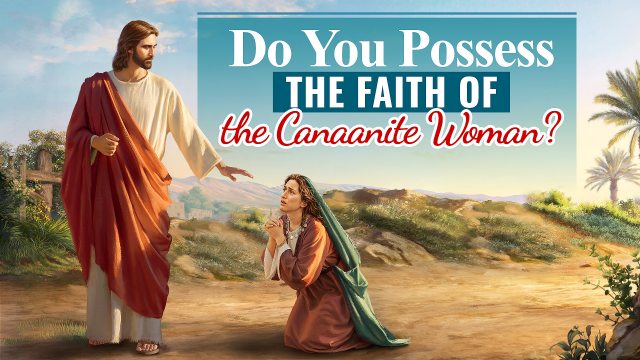
Encounter of Jesus with the Canaanite woman (Mt 15:21–28)

The Gospel of this Ordinary Sunday invites us to respond to the call of Jesus with extraordinary faith in the poor Canaanite woman. In this Gospel, Jesus encounters a Canaanite woman who begs Him to cure her daughter. Jesus initially refuses her request by saying, “It is not right to take the children’s bread and toss it to the dogs”. At first sight, Jesus' reply to this needy woman seems to be insulting and humiliating one but if we look at the background of the text, the Lord’s heart for the mission for the Gentiles will become apparent.

Let's look at some background material such as historical and literary context.

The encounter of Jesus with the Canaanite woman occurs only in two of the synoptic Gospels; Matthew and Mark. According to Matthew’s narrative, Jesus left Israel and entered Tyre and Sidon, which was Gentile territory. Jesus went there and he began to curse for the hard heart of less conversion. At that time, the woman meets Jesus both the Gospels affirm that she was a Canaanite woman.


Who are the Canaanites? Canaanites are those who were living in the promised land from the time of Abraham. Their history goes more than 5000 years ago, in the time of prophets, Canaan was also the object of the Lord’s anger as prophets always prophesied, “There is a word of the Lord against You, O Canaan, land of the Philistines” (Zeph 2:5) In this context of the regret and anger over the gentile nations, Jesus meets the woman. The Gospel of Mark says that she was a syro- Phoenician woman Syrophoenician means mixed race of Syrians and Phoenicians or Syrians who lived in Phoenician. (mixed race of Syrians or phonicians). But one thing is clear, she was a woman who was a gentile ignored by the Jews. 

Jesus’ calling woman a dog should not be taken in the literal sense. Jesus did not call her in the singular, but used the plural: “dogs”. Actually, gentiles were considered “dogs.” The book of Leviticus chapter 11 explains that gentiles were not allowed to enter the temple because of their impurity to offer sacrifices at the temple, they were considered unspiritual so to refer to an “unclean” animal. Jesus did not refer to Canaanite woman individually but used a general figure for all Gentiles. 

If we look at the original language of the text, Jesus used a different term to refer to the dogs here, in Greek, was kunarion, meaning “small dog” or “pet dog”. Usually, in the Bible, gentiles were called by the Jews by kuon ‘wild and stray dogs’ (Mt 7:6; Lk 16:21; Phil 3:2). Of course, gentiles are the dogs, but close to the heart of Jesus, they are concerned by Jesus. So, according to both the context and language involved, Jesus wasn’t referring to the Canaanite woman as a “dog,” either directly or indirectly. 

The response of Jesus should not be understood as if Jesus is not willing to heal her. It is not a matter of food; it is not a matter of different people; it is a matter of time; when to feed the children; when to feed the dogs. The v. 24 will identify the children with Israel and the dogs with the Gentiles. Mark gives additional truth, Mark 7: 27 - “Let the children eat first,” the children are fed first; later the dogs receive the scraps. the relativizing πρῶτον. The issue is no longer the leftovers of the children’s food that the dogs receive later. The people are different; the food is the same. In the Gospel, food refers to salvation. Salvation is available for all. Israel are the first-born children, and the Gentiles it is distributed later. 

The faith is the great issue here. In Matthew series of 3 verbal forms are used (came up, bowed down, said), there is also another meaning of prosekynei can mean “worship” the woman perceives Jesus’ divine nature. She is bowing down in a gesture of worship. Matthew is adding one more piece of information, the When the Canaanite woman approached and repeatedly asked for healing, the disciples were annoyed and asked Jesus to send her away. Jesus acknowledged her faith—calling it “great” —and granted her request (Matthew 15:28) which he could not recognize in the disciples whom he rebuked always for their little faith. He wasn’t using in a humiliating way, but rather testing the faith of the woman and teaching an important lesson to His disciples. 

The verse 24 is typical Matthean verse, “I was not sent only to the lost sheep of the House of Israel” Who are the lost sheep of the House of Israel? In the Gospel of Matthew, They were the sinners, tax collectors, prostitutes, and oppressed among the Jewish people. For Jesus said, “I did not come to call the righteous, but sinners” (Mt 9:13). Jesus is sent for this purpose, to welcome the tax collectors, prostitutes, and unclean people. 

I would like to summarize the Gospel: analyzing the Gospel geographically and literally we come to know that Jesus in no way used the words to insult/offend the poor Canaanite woman, but rather to test the faith of the Canaanite woman and by that teaching the disciples who always had little faith in Jesus. Salvation comes to the people of Israel and it does not mean it is close to the Gentiles, Jesus is sent to the lost sheep of Israel the sinners and tax collectors. 

At the beginning of the Gospel of Matthew, “Do not enter in any city of the Samaritans; but rather go to the lost sheep of Israel.” (Mt 10:5-6) Canaanite woman’s faith is a reward to all of us that God’s family is about to expand Israel to include ‘all nations. Mt 28:19 “Therefore go and make disciples of all nations, baptizing… Faith can move the mountains. Jesus is expecting the same faith from each one of us at the time of COVID-19, let us not be discouraged like the disciples often showing their little faith, rather let us challenge Jesus with our strong faith and prayer. 


1 Kings 11:4-13 and Mk 7:24-30

During the Academy Awards of Hollywood Movies, Chris Rock, a famous comedian while hosting the show, Will Smith walked onto the stage and slapped Chris in front of the Media. It was because he was joking about the appearance of Will's wife. The amazing thing was, How Chris handled that incident of insult and humiliation.

Today's first reading and the Gospel are teaching us How to react in those situations where there is a confrontation of the Lord with reason. (of insult and humiliation). 

In the First reading, The Lord is angry (only a few times in OT, do we read the Lord takes away his anger when Moses and Aron speak in favor of people). Here the Lord is angry with the reason because Solomon and his family turned behind other gods, idols and dedicated temples for their gods. 

The Lord is confronting a SyroPhonician woman with reason (some may think it might be an insult who reads the text literally) Here the issue is not food or persons, but when to eat? children eat first and the Gentiles eat next. the sacristans/altar servers first and you next. 

In front of the confrontation of the Lord, insults/humiliation, let us not be violent or discouraged, not like Solomon, but let us challenge the issues with our faith like the woman, 'Even the dogs eat under the table"

Every day the Lord is confronting us with reason, and we need to respond with our faith. Our faith has to undergo trials in order to go to the next stage.  

Food is available for everyone on the table. Criteria is sola fidei. One who responds with faith will be saved. 


Fr. Rajesh

Sunday, August 13, 2023

FOCUS ON THE PRIORITY and ignore the rest (Mt 17:22-27)

Do you know about the 'Tax Amnesty Act' in the Philippines? It is one of the Major acts and legislation recently signed by President Marcos. He has signed for a new two-year extension of the estate tax amnesty for the people, they tell more than one million Filipino families will get benefited from this amnesty act. 

At the same time, some criticize that President Marcos has a big number of unpaid estate taxes, it is to avail himself of unpaid estate taxes.

Tax governance was one of the important issues of the government. 

Today's Message from Jesus is "Let the little things never take the place of greater things in our life". 

Jesus was concerned about the greater things. For Him, the little things could be settled or ignored, instead of fighting upon. 

In today’s Gospel, the priority or focus for Jesus is to embrace the crucifixion, “to be handed over to men, and die”. He had clarity in his goal. That is why he did not spend time-fighting against the rules which were oppressing the poor people like the tax burden by the Roman Govt.

In today’s readings, Moses and Jesus are preparing the people for the kind of life, where we need to clarify the priority in our life; "to love and serve the Lord, your God, with all your heart and all your soul". 

Do not Give time for useless debates, and try to solve the big issues (to our eyes) in a simple way. 

Jesus said, “My kingdom is not of this world”. 

  • Many times we fix the priority as our goals, but spend time worrying about small things. 
  • Today the priority of young men/women is; “What reel in Instagram? How many likes are in this pic?” 
  • Small things should not take the place of essential things. 

Thursday, July 6, 2023

New consolation! for Isaac and Matthew


 Fri, 7 July 2023/ / / Gen 23:1-4, 19; 24:1-8, 62-67. Mt 9:9-13.

1. The events at Abraham’s home move fast. Sarah dies. Sarah’s tomb is the first property of Abraham in the Promised Land. Thus, God’s promise is getting fulfilled. Isaac becomes a young adult. Abraham bids his servant to find a spouse for Isaac from his own kin. The servant finds Rebekah, who is brought to Abraham’s house. Isaac takes her to the tent of Sarah and marries her. She becomes the consolation to Isaac who has been mourning his mother’s death. From a psychological perspective, after the event of the attempted sacrifice, the boy Isaac would have developed antipathy or anger towards Abraham and might have distanced himself from him. His detachment from his father might have made himself attached to Sarah. Therefore, he is not able to bear Sarah’s absence. In the heart of his heart, he might have felt very lonely. The greatest agony is to feel lonely in our own home. Isaac who is not consoled after Sarah’s death after he embraces Rebekah. Rebekah becomes his new consolation.


2. Jesus encounters Matthew sitting at the tax booth. The name Matthew is the shortened form of Matthathias (‘Gift of God’). He is also called Levi. The type of tax he collected is tax on foreign goods and journeys. He is collecting taxes from the farmers, the merchants, and the caravans that enter the city. Usually the tax collector pays the tax amount to the Roman Procurator in advance, and later collects it or more from others. This work was considered an unclean job. Matthew earns the hatred of his own people. The joy, the money, the contacts with Rome could not console Mattthew. There is a vacuum in him. When Jesus calls him, he immediately leaves everything and follows him – as if he waits for this day. He celebrates this by hosting a dinner to Jesus. Matthew receives new consolation from Jesus. 

3. Isaac, after the death of his mother, gets his new consolation from Rebekah. Matthew, in his life of boredom, hatred, and emptiness, receives new consolation from Jesus. At times in the life of human persons, always God becomes the source of consolation. What is the type of loneliness or emptiness that I suffer from? Jesus comes to give us consolation. What should we do to receive Jesus’ consolation? Like Isaac we need to go out to the fields to see him; or like Matthew, we need to be immersed in our own work. A person who receives God’s consolation is bound to share it with others.


God keeps His promise ever!

Thu, 6 July 2023

Thirteenth Week in Ordinary Time:  Gen 22:1-19. Mt 9:1-8.

There are many researches done on the sacrifice of Isaac in Mount Moriah on Gen 22 and the sacrifice of Jesus in Calvary.  Both are the beloved sons of their Father, Father himself voluntarily accompanies the child to Mount Moriah and Calvary.  


1. Hagar and Ishmael left the house of Abraham. Now, Abraham has only Isaac. God orders Abraham to sacrifice Isaac as a burnt offering – which means at the end of the sacrifice only ashes will remain. Abraham travels with his servants, and Isaac to the mountain which God showed. Abraham might have said to himself that it was a trial or a test not for him, but for God. For, if Isaac is killed God’s promise would go in vain. He was very firm. The only person who was confused was Isaac. Isaac asks, ‘Where is the object for the offering?’ The object itself asks about the object. But Abraham responds, "God himself will provide a sheep for the burnt offering. His Faith was simple like a child, but strong. 

In our life, we worry too much about problems and crises. Remember this is not our plan or project. It is God's plan. He has chosen, called and promised us always. Why to worry? Let us trust God like Abraham trusted Him even at the moment of the big trial. 

God is fulfilling His promises. But Abraham is part of humanity, we are not able to fulfil our promises. We need to listen carefully to God. «Both of you stay here with the donkey, while the boy and I go on over yonder. We will worship and then come back to you». But Abraham comes alone. It is a test for Abraham. But it is also a test for God, God gave his promise in previous chapters, I will make a descendant of Israel. God promised Abraham that He would make a great nation out of him. Many descendants. God promised to bless Abraham and the families of the earth through him.

God wants to take care of humanity. He called you, he promised you, He will save you, no worries! Even though he asks you for the precious treasure of your life, he can send a sheep from the corner of that mountain and save you. We need to experience this love of the father who can keep his promise at any time. 

Abraham knows that Isaac is alive, but the servants do not know. They saw Abraham was alone coming from Moriah, Abraham had a simple but strong trust in God. His answer to Isaac, where is the sheep for the burnt offering?». «Son», Abraham answered, «God himself will provide the sheep for the burnt offering» The servants had a payment trust. Abraham’s position was delicate. What will he answer to Sarah, what will happen to his dream/that he trusts simply without any conditions? 

2. In the gospel reading, Jesus gave a healing to the paralytic man looking at the faith of the people who took the bed and entered the house. Jesus is strange here, he does not enquire about the personal intention of the sick man, "Do you want to be healed?" Our faith is not always individual, but also community oriented. Jesus heals and gives not only physical ailment but also spiritual ailment, the sins. The scribes who witness this are confused. They murmur against Jesus. The scribes too were paralysed in their hearts. At the end, the person laid on the cot is healed. He carries the cot and walks back home. The others are still laid on their cots – crippled in their minds and hearts! The person who is seen by Jesus is healed.

3. In the first reading Isaac was laid on the wood. In the second reading the paralytic was laid on the cot. Both are restored by God, and Son of God respectively. The Lord will see not only on the mountain, but also on the plains. What must we do then? Should we be lying on the cot? No. Even when we are laid on the wood or cot may our eyes be on God. For, since God sees us, he cares for us!


Sunday, May 21, 2023

Christians will face the Tribulation

Acts 19:1-8 / Jn 16:29-33

Two months ago, I attended a burial service in which the young widow screamed at her husband's dead body, "How can I live without you?" Then I met her at the 40th-day anniversary mass, she was quite smiling and finding a way to live a new life. We need to go on. We cannot stop our life because of tribulations. 

Yesterday we celebrated the Feast of the Ascension of our Lord. The readings of this week prepare us for the feast of the Pentecost that we celebrate on the forthcoming Sunday.

In the gospel reading, in the farewell discourse, Jesus tells, ‘In the world you have tribulation. But take heart, I have overcome the world.’

Jesus’ approach to suffering is very existential. He approaches suffering as part of existence. All the world religions respond to suffering in a way looking at it as a reality of our life. Suffering is a reality in our life and there is no escaping it. Since the Fall (Genesis 3), suffering has been part of the human condition. Three things are worth noting from Jesus’ words in today's gospel. 

1. There is a tribulation in the world: Jesus says, you will always have trouble and suffering. The term "suffering" comes from the Greek word tlipsis; The noun ‘tlipsis’ comes from the verb ‘tlibow’ which means ‘to squeeze,’ or ‘to compress,’ or ‘to choke’ or ‘to press hard.’ Tribulation puts pressure on us. You will see the Thlipsis word in the blood pressure machine. Jesus says the trouble in your life gives you pressure in your heart. You think always about one thing, when you do not receive this, then you suffer really. 

Buddhism says attachment is the root of all suffering. One is attached to people, material things, and specific outcomes and then you need to suffer.  For Jesus, the attachment does not belong to this world, "I am going to leave this world." 

2. Take heart: Jesus does not advise us to remove our suffering, which is not possible. Be courageous during the time of suffering. For I have conquered the world. He does not give fake hopeful sayings. You will win the sufferings. Only God can win death. We can participate in his resurrection later on his second arrival. 

3. The promise of the Holy Spirit: In the first reading, Paul and his collaborators are coming to the city of Efeso which is a mountain area. Paul asked them «Did you receive the Holy Spirit?». They said, «We have never even heard that there is a Holy Spirit». The situation of the Catholic people is most of the time like the one of the people of Efesus. Many times this is our answer as well. The Holy Spirit is the forgotten person of the Holy Trinity. It is high time that we thought of him, sought him, and owned him. Holy Spirit strengthens us, encourages us and supports us. 

As we prepare ourselves for the Feast of the Pentecost let us pray for the gift of courage amidst tribulations. May our minds be freed from fear.

Monday, May 8, 2023

WOUNDED HEALER


Tuesday, 9 May 2023 / Fifth Week of Easter / Acts 14:5-18. John 14:21-26.

Henri J. Nouwen, while talking about the spirituality of a diocesan priest, uses the expression ‘wounded healer.’ He reflects that every priest who is a healer at the confessional or in a counseling session is wounded himself; however, he heals others. And since he himself is injured he is able to feel with the wounded.


In the first reading, violence is perpetuated on Paul; he was dragged out of the town and stoned by the crowd cruelly. People leave him half-dead. Paul, the wounded apostle, later, Paul rises to join Barnabas and returns to Antioch where he will encourage the believers who are persecuted. Paul sets aside his own sufferings and offers consolation to the suffering. Paul becomes a wounded healer.
 
In the gospel reading, Jesus promises peace to his disciples. At every Holy Mass, we recall this event. Jesus, all along his life, experienced different peace-less circumstances; he was wounded at the cross, scourging at the pillar, and crucified by the soldiers. Since Jesus has experienced anxieties and tribulations he knows the value of peace. Jesus is a wounded healer as well.
 
We all are wounded healers in our homes, workplaces, churches, and society. Though our wounds are still hurting, we extend our hands to heal others.

Thursday, May 4, 2023

Jesus, Prince of Peace

1st Reading (Acts 13:26-33):

Gospel (Jn 14:1-6):

God had always cared for the people of Israel: Paul went to the synagogue to comfort his brothers in faith. God sent his Son to fulfill the promises of the OT.

These promises were transformed into a victory of the Resurrected through the absurd happenings of the crucifixion. The success was achieved through a complete defeat.

The Defeated was removed from the face of the Earth, we get a place among the triumphant winners, a place not on the Earth but in Heaven. That place cannot be taken or tarnished by any evil. Jesus asks us to have faith in Divine Providence and His Love in any situation. Nothing should disturb our peace. He / Jesus also had complete faith that the Father would never abandon him. 

Thanks: Zeljka 

Sunday, April 30, 2023

Labor's day

President Ferdinand “Bongbong” Marcos is going to lead the celebration of the 121st Labor Day and he will launch major job fair activities to provide many local and overseas job opportunities to Filipino workers.

On the same day, in the other part of Manila, more than 10,000 workers will protest asking for their proper rights, daily wage increases, decent work and problems of unemployment. 

1. Work is a vocation of Man: Man is called to work from the beginning. Work is one of the characteristics that distinguish man from the rest of creatures,

Genesis 2:15 – “The LORD God took the man and put him in the Garden of Eden to work it and take care of it.” After the human beings committed sin, God cursed them, “By the sweat of your brow you will eat your food until you return to the ground” (Gen 3:19)

God created the world, light and so and so in the universe. Then He created man, and He gave man and woman a mission: to manage, to work with and bring forward creation. To the point that work is none other than the continuation of God’s work: When we work, we are collaborating/participate in the creator’s work. Work as a sharing in the creating activity of God. (தொநூ 1:27, 2:5, 2:15, எபே 2:10) God is creating out of nothing. We create out of something. 

2. Work involves the whole person: And work means any activity by man, whether manual or intellectual. Work involves the whole person; when we work, our body, mind/heart and spirit should be involved. Work cannot be reduced only to manual work. Thomas Aquinas spent his long work only in the library, while Francis of Assisi never dedicated time in the library. 

3. Work brings you near to God: Spirituality of work: work will help people to come closer to God. 

There is a right to rest. In the first place, this involves a regular weekly rest comprising at least Sunday, and also a longer period of rest, namely the holiday or vacation taken once a year or possibly in several shorter periods during the year. Do not be a workaholic, take proper rest: even God rested on sabbath day. Especially in the modern age, the spirituality of work should show the maturity called for by the tensions and restlessness of mind and heart.

Tuesday, April 25, 2023

Emmaus disciples and the garden

The appearance of the  Risen Lord to two of his dejected disciples on the road to the town of Emmaus. 


We want to read the passage, (which is read during the octave of Easter and on the 3rd Sunday of Easter), in the light of Genesis.

Evangelist Luke invites us to connect the story of Jesus with Genesis. 

They are walking away from Jerusalem (which was considered the place of salvation for Jews). They were depressed and did not have hope at all. It is traditionally believed that Jerusalem is the site of the Garden of Eden. The image of a man and woman walking away from Jerusalem is reminiscent of Adam and Eve cast out from the Garden towards the East (Genesis 3:24). In Genesis 3:24, we read that they are driven away from access to the tree of life. Just outside of Jerusalem proper is the new tree of life, the Cross of Jesus Christ.

Gen 3:8 - God was walking with the first parents in the garden. The lie of the serpent, who infiltrated the Garden, was that the eyes of our 1st parents would be opened. (Genesis 3:). This opening was actually a spiritual closing that rendered them unable to see God for who he is. They could no longer recognize their  Father who loves them. The slowness of heart. Confusion, inability to see, not being able to recognize God and the designs of God— this is the state of the couple walking away from Jerusalem. And, this is signified by the couple literally being unable to recognize him in his glorified state. Jesus, God himself, came to bring us back to the Father, to restore us to the right relationship. Indeed, Jesus, came to give us sight:

 Jesus said, “For Judgment, I came into this world, that those who do not see may see, and that those who see may become blind.” – John 9:39

And whoever can truly see Jesus sees the Father (John 14:9). 

We are told that they were sad or downcast (Luke 24:17). The fall introduced sadness into the world, a condition that affects us all. It seems they have lost hope, even though they have heard that Jesus who was handed over by the Sanhedrin, crucified by the Romans, was seen alive. And it is this frame of mind, of confusion, of doubt, of being unable to see the design of God, that afflicts the couple who are walking away from Jerusalem.

It seemed that all their hopes were dashed because they thought that Jesus would be the One to liberate the people from foreign oppression and dominion and yet he was put to death by those very powers. How could Israel be redeemed if the had so much promise to do it died on a cross? But some of the women reported to have seen him. Was that possible and what would it mean? I think these were some of the things just they were discussing.

In Genesis 315, God promised to redeem man. It was necessary that he should suffer and enter into his glory, making it possible for all who share the same human nature to enter into union with God, the union that had been lost in the fall. This is happening here! God intercepts the man and woman and walks with them. And walks and walks until it is evening. Just as he walked with Adam and Eve, “in the cool of the day,” he now walks with man and woman, restored by the Cross and Resurrection.

Elsewhere, I wrote about the greatest Bible story ever told—Jesus opening up the Scriptures to the 2 disciples on the road to Emmaus. Just a word about it here: this couple representing humanity is being brought up to speed on what God has been doing to bring back the lost to him, ushering in the return to Paradise. A review of salvation history.

“Stay with us,” because we can no longer bear to be separated again. Humanity lost deep and abiding relationship with God and were barred from access to the tree of life and its fruit. But now it is possible for God to abide with us and in us, through the gift of grace

“When he was at table with them, he took the bread and blessed, and broke it, and gave it to them. 31 And their eyes were opened and they recognized him…”

When they were given the blessed fruit of the tree of life, their eyes were opened. Opened, not closed – – which is what happened to the eyes of the 1st couple when they took the fruit of the wrong tree. Life is restored in the medicine for the blindness of man – – the medicine freely given to us every Sunday. The Holy Eucharist is the antidote to death, because it is the Resurrected Christ Jesus himself. Jesus may have disappeared from their sight, but only from physical sight, and that, only temporarily. Now he is seen with the eyes of the gift of faith until we may behold him as he is, on the everlasting day.

And so, the couple are compelled to go back to Jerusalem, with joy in their hearts. They are returning back to the site of the Garden because it’s been opened back to them…

Wednesday, April 19, 2023

Call within a call - Miraculous fishing

John 21:1-14

How often have you considered discontinuing the seminary formation or job commitment and choosing another life? Some brothers replied "Many times". 

We often think in our life in the midst of difficulties, it is good to decide and go back to our origins. Peter and his companions returned to the old job that is to do fishing. 

Listen and search for God who is standing on the shore, do not follow human designs: 

Simon Peter said to them, “I am going fishing.” The other disciples also said to him, “We also will follow you.” They should be reminded of the first call from Jesus. Jesus was walking beside the Sea of Galilee, he saw them and said, "Come, follow me," At once they left their nets and followed him. (Mt 4:18-22) Call per itself is divine in nature. We need to listen only to Him who chose us when we were formed in our mother's womb. 

Spiritual persons are also assigned for guiding us during our troubles. we need to verify they are filled with the spirit to direct yourselves to God. Remember the vocation of Samuel, when he was not able to recognize well the voice of God, it was Eli, his teacher who helped to direct him to listen to the voice of God. Jesus does not enter into your problems. He is waiting on the shore and only giving directions "Cast the net over the right side of the boat and you will find something.” He helps you to come out of the particular situation. 

Come and Eat: 

Jesus said, "Come to me all who are oppressed and tired of I will give you rest". Jesus restores the body and soul. Before the suffering, death and resurrection, Jesus was inviting the disciples to have a "Come and See" experience. Now it is time to make the "Come and eat" experience. Jesus makes the disciples pass the night in the sea. Then he appears at the dawn. Everyone should undergo this experience and they return to the master who will sustain not only their body but also their soul. He feeds them so that they may feed others. 

Tuesday, April 11, 2023

TODAY IS CALLED THE PRESENT

Gospel text (Lk 24:13-35):

Have you watched the movie called Kung-Fu Panda? There is an interesting scene where Master Oogway, an elderly tortoise and a wise teacher, teaches the best lesson to Panda when he is found depressed, “Yesterday is history, tomorrow is a mystery, but today is a gift. That is why it is called the present.” 

Jesus wanted to teach the disciples who were focused on what had happened. The disciples were conversing and debating on the brutal things that happened in the past. Jesus himself was present with them walking near. They were stunned by what happened the last Holy Week, a traumatic, humiliating, and wicked incident that happened to their master. But the Lord was walking with them alive in present.  He was not struck with the past events: the cunning planned betrayal, abandonment of the disciples and crooked chief priests. 

I think, we need to focus on the beautiful things happening every day in front of our eyes; God is explaining the scripture applying to your life, and the Lord is encouraging them to eat with Him every day. Yesterday is over and finished with. Whatever happened, happened. Whatever didn’t happen, didn’t happen. Spending time and energy in the present fretting over things that are now history is a waste of your resources. 


It is a big message we need to carry into our communities and families. You should never regret what happened on the past: whether good, bad or fantastic, it will be always an experience. But nangyayari an. what had happened, happened. 

TURNING BACK TWICE TO JESUS

Tuesday in the Easter Octave
Acts 2:36-41. John 20:11-18.
 
Turning back again and again to JESUS 
 
Let us begin today’s reflection with an insight from Saint Augustine. In the gospel reading, Mary of Magdala stands in front of the tomb weeping. She talks to the two angels who were sitting inside the tomb of Jesus. She turns back and sees Jesus. But she sees Jesus as a gardener. She begins her conversation with the gardener. At the end of the conversation, the gardener says to her, “Mary!” She turns again and says, ‘Rabbouni’, and hugs him. She realizes that it is the Lord. Mary has already turned back from the tomb, towards Jesus. How come she turns around for the second time?
 
Saint Augustine interprets her two turning backs this way: ‘The first time when Mary turned she turned her body toward Jesus. Only the second time she turned her soul. She could recognize the Lord only when she turned her soul towards the Lord. When her body was towards the Lord, and her soul was towards the tomb, she partially recognized Jesus as a gardener. It is when our body and soul together are turned towards Jesus we are able to recognize him as our Lord.’
 
Mary’s recognition of Jesus occurs in four stages:
  • First, Mary did not find Jesus.
  • Second, she sees him as a gardener.
  • Third, she sees him as ‘rabbouni’ (‘my teacher’).
  • Fourth, she recognizes him as ‘the Lord.’
 
Jesus sends her on a mission. But she forgets everything. She just says, ‘I have seen the Lord.’
 
According to the Fourth Gospel, ‘sees’ means ‘believing.’ When the Greeks say to Philip, ‘Sir, we would like to see Jesus’ (cf. Jn 12). Here, ‘seeing’ means ‘believing.’
 
Mary’s announcement to the apostles becomes the foundation of faith.
 
Mary of Magdala announces to the apostles, ‘Christ is alive.’
 
Let our face and soul be not towards the tomb. We shall turn back. He stands behind us. Sometimes as a gardener, sometimes as a teacher, and sometimes as the Lord.

Tuesday, April 4, 2023

Holy Tuesday

In the early literature, we meet several examples of tragic heroes. Before their death they experience Abandonment Issues, How to deal with abandonment issues in Your Relationships, when you are totally abandoned by your loved ones, you need to handle them attentively. Similarly, Jesus is abandoned by the human persons whom he loved very much one by one: Judas, Peter and other disciples. Jesus is addressing them indirectly to the persons first, then telling them also directly. 

Judas: is a figure of one of the disciples, therefore a figure belonging to the group of those whom Jesus had chosen as strict companions and collaborators. It was repeatedly written in the gospels as "one of the twelve" (Mt 26: 14, 47; Mk 14: 10, 20; Jn 6: 71) or "of the number of the twelve" (Lk 22: 3). Betrayal and denial are part of his discipleship, one has to undergo even though it is a painful process with the hope of grace of resurrection.

Then you may ask this question, "Then Why did Jesus choose him/call him?" The mystery of the choice remains, all the more since Jesus pronounces a very severe judgment on him: "Woe to that man by whom the Son of man is betrayed!" (Mt 26: 24).

There are three biblical motivations for Judas' behavior: why does he betray Jesus? 

1. Greedy for money: What is the worth of 30 pieces of silver today? Historians agree that most probably, Judas was paid in Tyrian Shekel. This is because the Tyrian shekel was the currency used during the era to pay for the Temple tax in Jerusalem. So, if half a shekel was two days’ salary, one shekel was four days’ salary and therefore, 30 shekels were worth 4 months’ salary (120 days’ salary). He decided to betray the Lord for this invalid money. 

2. Judas was a zealot: Judas was part of this political-militaristic group who were fighting for their nation's liberation from the Romans. Judas learned that this is not possible for Jesus' preference for the kingdom of God through ministry to the poor. Judas would have been disappointed at seeing that Jesus did not fit into his program for the political-militaristic liberation of his own nation. 

3. Satan entered into Judas: Luke expressly says that Then Satan entered into Judas called Iscariot" (Lk 22: 3). It was not the personal initiative of Judas but voluntary act of devil, but with the freedom based on the personal responsibility of Judas, who shamefully ceded to a temptation of the Evil One.

The third one seems to be valid for me. Jesus has planned/predestined everything according to the thought of God. Your names are written in the palm of God. But He respects you to act in freedom. attention to the work of the devil here. Jesus does not force his will or protect it from the temptations of Satan, respecting human freedom. It is a combat between a disciple and the devil. Peter put everything on his own shoulders not allowing God to act at all saying, “Master, why can I not follow you now? I will lay down my life for you.”  Let us remember that one of the easiest manifestations of Satan is Ego.  

Let us remember two things in the cases of Peter and Judas.

1. Jesus respects our freedom. 

2. Jesus awaits our openness to repentance and conversion; he is rich in mercy and forgiveness. 

Judas also repented, but his repentance generated desperation and thus became self-destructive. The word "to betray" is the version of a Greek word that means "to consign". Do not surrender at any cost, at any moment. Sometimes the subject is even God in person: it was he who for love "consigned" Jesus for all of us (Rm 8: 32). In his mysterious salvific plan, God assumes Judas' inexcusable gesture as the occasion for the total gift of the Son for the redemption of the world.

SIN cannot be the last word; the last word is God's MERCY. Easter time is the adequate time. On the Cross, Christ opens his arms wide to all of us, nobody is excluded. Every repented thief has his place in Paradise. On condition, however, to change his life and remedy his shortcomings, like the thief in the Gospel: “And indeed, we have been condemned justly, for the sentence we received corresponds to our crimes, but this man has done nothing criminal” (Lk 23:41).

Monday, April 3, 2023

Holy Monday


In the first reading God institutes the figure of the Saviour , he gives him all the possible credit and tells us to look at him. At Him only. 

Now the Gospel has many figures going around the Servant of God, Jesus. Martha, Mary, Lazarus, Jude ...many faces appear. Even Lazarus is depicted as one of the diners. There is a lot of movement at the dinner. But, the question is: who is looking only at Jesus? Are we following only him or are we taken by daily chores like Martha? Are we concerned about talking to people like Lazarus or maybe we are Judah who thinks of the poor outside or we are like the priests who think of their position? There are three persons and with their attitudes we begin the journey of Holy week. 

1. Any complaint should be an act of responsibility: if we complain we have to ask ourselves how we would have handled the situation and what we would be willing to do if we were in that position. Our complaint should have good motivation. Otherwise, we run the risk of unjustly criticizing someone for doing the best they can, according to the circumstances.

On the other hand, Mary anoints Jesus' feet and wipes them with her hair, because she truly believes that this is what she must do. This is an act of great benevolence toward Jesus: “Mary took a liter of costly perfumed oil made from genuine aromatic nard” (Jn 12:3). It is an act of love, and like any act of love, it is difficult to be understood by those who do not share it. I think that, at that very moment, Mary realized what St. Augustine wrote centuries later: “Perhaps on this earth the Lord’s feet are still in need. For of whom but of His members is He yet to say in the end, “Inasmuch as ye did it to one of the least of mine, ye did it unto me”? Ye spent what was superfluous for yourselves, but ye have done what was grateful to my feet.”

Judas' complaint has no utility whatsoever, and it only led him to treachery. Mary's act, on the other hand, led her to love her Lord even more and, as a consequence, to a greater love for all the “feet” of Christ in world today.

2.  Who is this Mary? 
According to Greek Orthodox traditions, there are three distinct women of which the Gospel of John speaks; Mary of Bethany, sister of Lazarus, Mary, the sinner (prostitute) and Mary Magdalene whom she has been very forgiven because she has loved much. The Greek liturgy commemorates all three women separately while Latin church commonly commemorates one woman; Mary of Magdalene. 

Mary, the sinner, washing the feet of Jesus is a reminder for us who begin the journey of the Holy Week. The only one who really touched Jesus is Mary, she is even scolded for the waste of the perfume. She is at his feet, in humiliating position, washing his feet, giving all herself to the service. Why? Wasn't it more natural that the resurrected Lazarus should be in her place kissing the feet of Jesus for having given him another life opportunity?

1. She is silent and washes the feet of the Son of God. An act of high repentance for her misdeeds. 
2. An act of love; unique intimacy: 
3. An act of consecration;   

Today, the Gospel summarizes two different attitudes about dealing with God, Jesus-Christ and life itself. We see the attitude of Judas criticizing Mary for anointing Jesus' feet: “Then Judas the Iscariot, one of his disciples, and the one who would betray him, said, “Why was this oil not sold for three hundred days’ wages and given to the poor?” (Jn 12:4-5). What Judas said makes sense as it ties in with Jesus' doctrine; but it is easy to criticize what others do, even when there are no hidden intentions, as it was with Judas’ case.

Jesus goes every day on the Cross for us. In the Eucharist  he offers himself. Where are we in the picture? Are we at his feet or somewhere else, passing by and even mocking him?

The gospel of the day is a pre- announcement of the Calvary scene. We are all different and we all have different roles but the most important one is in serving the Lord who loves us.


March 24, 2024,  John 12:1-11

How to spend the Holy Week? Whom we can follow? The Holy Week starts with the prostitute woman, a figure of pure passionate love. Who is she? 

According to Greek Orthodox traditions, there are three distinct women of which the Gospel of John speaks; Mary of Bethany, sister of Lazarus, Mary, the sinner (prostitute) and Mary Magdalene whom she has been very forgiven because she has loved much. The Greek liturgy commemorates all three women separately while Latin church commonly commemorates one woman; Mary of Magdalene. 

1. Passionate love: Love of intimacy, Mary stands for her love of passion, intimacy and deep affection towards the one who is going to suffer right now. There are two cultural hindrances the woman is violating; No young woman can participate in a public Jewish banquet, they have their own place at the feast, public dinner (wedding at Cana, mother is a household lady). How can she come at center in front of a prophet? image of a prostitute, an attractive woman. 

The Lord allows her to wipe his feet with the hair (Jn 11).  No woman is found publicly with unbound hair (prostitute's symbolic act in Jewish parties).  There was a special study on “A Woman's Unbound Hair in the Greco-Roman World” Only two types of Jewish women can appear with hair unbound, prostitutes or women while having their relationship. In every case, this act of young woman, Mary expresses the love of passion, spousal love and nearness of intimacy to the one who is going to suffer. 

2. Judas makes a complaint, which seems to be valid. You need to look at the motivation is not genuine. Any complaint should be an act of responsibility: Complaints should be for the construction and proposals should be done with responsibility. Our complaint should have good motivation. Otherwise, we run the risk of unjustly criticizing someone for doing the best they can, according to the circumstances.

Judas said, “Why was this oil not sold for three hundred days’ wages and given to the poor? Jesus meant to "You always have poor with you" in the sense, a different approach to poverty is required! do not get worried about solving all the problems of poverty within a day. they are always with humanity. Do you think the oil can be sold and distributed to the poor, how many will get the benefit, and how many days you can help them? 

Jesus is not against helping the persons of those in need. It was meant to be a way of recognizing this woman’s devotion and love. Leave her alone!  We say poor! but they enjoy it more than us! they are happy and more generous than us, Leave her alone should be interpreted like this! 

This is a powerful lesson for his disciples in every age. “the poor you will always have with you”. let us not exaggerate thinking about the poor in war, poor in our images, poor are not people “outside” our communities, but brothers and sisters whose sufferings we should share, to alleviate their difficulties and marginalization, restore their dignity and mutual sharing generates fraternity. Almsgiving is occasional; mutual sharing, on the other hand, is enduring.

Where are we in the picture? Are we at his feet or somewhere else, passing by and even mocking him?

Saturday, March 25, 2023


What is the Type Scene? Type Scene is a kind of literary technique that many ancient authors used in their literature. They used in works where the particular scene has the same feature or pattern all over his works. For example, the films of James Cameroon have some garden-type scenes. There was a recent study on type seen and they discovered in the bible there are a number of type-scenes present; betrothal-type scenes, dream type-scenes, banquet type-scenes and et cetera. Annunciation is one of the type scene event. 

If the authors wanted to narrate the story of a legend, they speak about the nation which was under slavery and people were suffering, God choose a poor family and there is a barren lady in that family.  The angel of God was sent to her and announces god's message about the birth of a legend, initially, she does not receive the message then she receives and the birth takes place. This is called the annunciation type seen in the bible. 

There are three annunciation-type scenes: The birth of Samson, the birth of John the Baptist and the birth of Jesus. There are many similarities between these three, but Mary's YES was unique and different compared to other scenes. Manoah's wife (mother of Samson) had also pronounced yes but a different kind that of criticizing and demanding YES. He was dependent to Manoah, her husband. Zachariah did not tell yes directly but with the heart of a high priest. But Mary had the heart of the humble immaculate lady.  innocent question. God wants us to express our honesty. God with hold the heart of a priest of a Leader Be simple and fight your ego every day.

Bring a sacrifice to the Lord

"…when a man among you brings a sacrifice to the Lord…"—Leviticus 1:2

We are beginning the book of Leviticus this week. The word Leviticus means “of the Levites.” The name makes sense considering that the book is primarily focused on the service in the Temple or the Biblical laws of purity and impurity.

Today though, the Levites are for the most part unemployed!

The Second Temple was destroyed in the year 70 CE and hence the end of the sacrificial system which was a central feature of the Temple.

Jews today pray three times a day paralleling the morning offering, the afternoon offering and the burning of the remains of the offering in the evening.

Substituting prayer for sacrifice is explicitly written in the book of Hosea where it says “…we will render for bulls the offering of our lips” (Hosea 14:3)

The English word sacrifice means that you are giving up something that has some level of value to you often in exchange for something else or for a higher value. For example, you may sacrifice your time for a friend or you may sacrifice your money for a good cause.

When we think of sacrifice in the context of the Temple, we think of the offering of an animal or in some cases vegetarian offerings.

In order to understand what the sacrifices in the Temple meant, we need to look at the Hebrew word used. The Hebrew word commonly translated as a sacrifice is “korban.”

The root of the word korban means “to come close.” It does not mean to sacrifice. When a person would bring any kind of offering in the Temple, and there were many, the goal was always the same—to get closer to God.

Whether it was a voluntary offering, holiday offering, peace offering, Nazirite offering, sin offering—what they all had in common was that it was a means to help us get closer to God.

The bringing of the offering was not an end in and of itself. This is a common misunderstanding of what a korban is. It is not a magic trick that somehow offering an animal in the Temple will affect an outcome automatically. The korban was the culmination of all the inner work that a person would do and it was a reflection of that.

Think of it this way. A person invests time and energy into a project and then makes a party to celebrate the completion of the project. The korban is the completion of the project–of all the inner, spiritual work that is invested to get closer to God. The korban is the celebration of the end of the process.

Thanks: Rabbi Moshe, weekly devotional

Thursday, March 9, 2023

LIFE OF JOSEPH FORESHADOWING LIFE OF JESUS

God loves the man and he offers his beloved son for us every day in the Eucharist. The sacrifice at the Cross was a visible sign of invisible mercy we experience every day.

In the first reading, we see how Israel loved his last son, he was the son he had in advanced age. He knew that he would not generate again and this last child was like a closing life legacy to the world. This son was his last love in the life. Many times we were told that Joseph is a figure of Jesus, sold and abandoned. Every detail of the story of Joseph matches the life of Jesus. Even his being cast in a well, is very similar to the place where Jesus was held during the night before coming in front of Pilatus. Jesus is also God’s only begotten, the last son of the alliance. God sent many prophets to the people of Israel to call His people back from sin, but their ears were always deaf, or their hearts were attached to wealth and sin. Jesus narrates about the vineyard slaves who kill the legal son thinking how to solve the problem of the vineyard and keep it. Jesus hits the nerve of the Pharisees and priests because that is their thought precisely. How can they keep their positions and wealth, love of the people and well-being? The exact thought also of Joseph’s brothers. 

Do we sell our brothers and sisters to be well-off ourselves? Are we ready to throw them away because of our ideas and positions? Do we sometimes look at a person with disgust and rejection because it is more loved in our eyes by God or by other people? One can kill not only with weapons but more often by envy, hatred, prejudice and haughtiness. 

This Lenten time is a good moment to look for our Josephs in the wells where we threw them and give a hand of reconciliation. Though God can save his son from any evil and let come good out of evil, we should never find ourselves dirty with the blood and tears of our brothers and sisters. God will know what is hidden and as in the story of Joseph, God will bless his sufferings but with what face and courage can we appear in front of God and face his wrath if we abandoned our youngest and smallest brothers in Christ?

Let us use this Lenten time for reconciliation and love....

Thanks: Zeljka

Wednesday, March 8, 2023

RICH MAN AND LAZZARUS

If you are one of the Jeepney passengers in the Philippines, you will not be indifferent to the suffering of the Jeepney drivers at this moment. More than 100,000 drivers launched a national strike against govt plans to provide new Jeepneys. A Jeepney driver says, “Govt is indifferent to our livelihood."

The theme for today is indifference or carelessness toward the other and it is visible in today's readings. We are called to be sympathetic, concerned and helpful to the other who is living next to us. As human beings we are responsible for others, we can not give God the irresponsible answer of Cain, "am I guardian of my brother?" 

1. The parable tells vividly the amount of wealth that separates the rich man from Lazzarus. Apart from this wealth, there is also Lazzarus' experience of suffering that has to be noted; Lazzarus body was full of sores, even dogs were licking his sores. The rich man was indifferent to the pain of Lazzarus all his lifetime. (In Old Testament, chronic diseases were considered cursing. Society had a lot of rules of isolation for the sick person because they wanted to care the society. In the parable of the good samaritan also, the two persons passed by on the other side being indifferent to the suffering of the other). 

Remember! physical suffering in this world is temporary suffering. Death puts an end to this. What the rich man was experiencing today in hell is "eternal torment". We need to show solidarity with the suffering ones in our temporary life. Solidarity is not merely a question of helping others, but it is more than that - it is a matter of justice.

2. The rich man and Lazarus had one thing in common. Both were Jews. Both were sons of Abraham. According to Torah, one Israelite should help another Israelite. In a special way, he should be concerned with the poor and abandoned. In this case, he disobeyed Torah also. He did not even concern his own family member. Charity begins at home. People who need our help are all around us. If our vision is focused on wealth, fame and power we may not care about them. 

3. Everyone should make this reflection, "Who is poor for you?". We may help the poor persons generously. But with what attitude? The rich man did not even have concerns about the poor Lazzarus in the next world. He argues with Abraham to send Lazarus to dip the tip of his finger in water and cool his tongue. In his mind, Lazzarus  is still a slave, a work that he could command at any time and by whom he should be obeyed. The first reading is opening our eyes in regard to this. God is God. The poor are not God for you, we should treat him equally so that we identify Jesus in then. For Jesus said, "whatsoever you do to the least ones, you do to me" (Mt 25). In today's first reading, God curses the people who put their trust in human beings. We can share our love with the people, and we can help and feed them, but we cannot believe them, we can only believe in God. 

Popular Posts