Wednesday, December 27, 2023

Feast of St. John

 (Gospel of Jn 20:2-8): 

Running to meet the Lord: This verb was rarely used for the disciples in the New Testament. Running means for the disciples those who are on Journey. John calls himself the other disciple. It is a way for every disciple to open his own figure in John. Who can be other disciple? Anyone who wants to follow determined is called another disciple. But he has to run. Make research to know who is Jesus Christ?

The disciple runs, sees and believes: This constant search for Jesus is like a blazing fire in the heart of John. John was able to experience Jesus newly which all the other disciples also could do. He experienced Jesus as Logos, "In the beginning, there was a word, and the word was with God". He tried to look at Messiah newly his preexistence before the creation. 

Run with the Church: John does not want to run alone, but with Peter, a representative of the Church. We, religious persons, are on a journey with the Church. Like any community, we are the people of God, God has instilled this different spirit in us, but the goal is the same, that of the Church. The consecrated people are at the service of the Church. The fidelity to the Holy Father is one of the essential aspects of our Charism. Blessed Palao and our Founder insist on the same. John's community was considered a theological community, one of the pillars of the Jerusalem Church, but he did not want to overtake Peter, he respected the primacy of Peter. 

Tuesday, December 19, 2023

Birthday of St. Luigi Guanella

Do people choose to take vacations? How to plan a Christmas vacation?

Anong your choice for the summer? Beach or mountains? 

According to a new study, most people from Manila prefer the beach to the mountains, while people from the province prefer the opposite. 

They say the way one is living with nature reveals something deeper about one’s personality. 

naka akyat na ba kayo sa kahit na anung bundok sa filipinas? Katulad ng Mount Pulag, mount banahaw

Don Louis Guanella, our Founder was born on this same day, 180 years ago, in Fraciscio, the place which was surrounded by numerous beautiful mountains, approximately 3000 meters in height. At this time, usually during the winter, you will see the snow falling on mountains and the water will be just frozen. The young people still admire the beauty of these mountains.

Fr. Guanella loved the mountains, their nature, his loving village and his relationship with the people very much (nostalgic), when he left Fraciscio (in 1854) to join in the Gallio School in Como. He said he became a bird in a cage. 

Fr. Guanella wrote a booklet called Montanaro in 1886 (he dedicated the book to the people of Valtellina, because they were hit by floods in Sep 1885 which caused many deaths and serious damage). In his booklet the Mountaineer, Guanella discovered the values of the mountain people that nature provided each one of them; in fact, he cites memories from his own childhood, his emotions, and family experiences. I would like to show you only three qualities of the mountain priest. 

1. Mountain priest is above all a man of God: ang pari sa bundok ay higit sa lahat ay linkgod ng diyos. Ang mga tao sa bundok ay mayroon malakas na pagka-relihioyoso. 

The mountain people (the people of the valley) commonly have a strong religious sense (and they say that because they live near paradise). 

Mountains are present also in the bible because the people of Israel lived in and around the mountains. In the Bible, Mountain is a place of God-experiences. The mountain was the place of encounter with God.  (it is because God appeared to Moses and spoke with him in Mount Sinai where he gave the commandments. The psalms speak about the Holy Mountain (Zion), it is Jerusalem (there is a Mount of Olives). In NT, Jesus climbed to the mountain many times to pray alone, sometimes with the disciples also on the scene of transfiguration). 

Fr. Guanella, a mountaineer had a special grace to relate with God as a father. God is my Father and he will never abandon his child. It was his personal conviction. Like the village Fraciscio surrounded by the mountains, the people felt that they are always watched over by God by his love. Kai sabi ni Guanella, “Ang Diyos ang guma’gawa” That’s why he was able to say, It is God who does! (in the moment of success) nagma’matyag ang diyos, hindi niya pinaba’bayaan ang kanyang mga anak “God sees me. God provides for His children.” This is the first secret of the mountaineer; the Divine Providence. 

Fr. Guanella wrote in the book called Mountaineer said, “My Mountains are very high, because from there I am able to contemplate Paradise in a better way. My hometown is dearest to me’. It is close to my heart. because we love God. God’s Providence is always with me, thus, nothing should scare us”.

Give your first place to God! Do not start /work/dream/plan without giving a place to God. Be a man of God, like this mountain priest, and never forget to say It is God who does!

2. Man of Communion: 

Guanella came from a rural family in which there were 13 children. He was the ninth child. The mountain people lived healthy relations among themselves as one family. in Fraciscio, all the inhabitants helped each other to ensure a good family and social life, they shared in the joys and sufferings of the others. He learned the family spirit in this context of the mountain village and his own family.

The motherly love of Maria Bianchi, affection of Catherine, his sister and paternal support of Lorenzo made him to be a loving priest, and a servant of Charity. 

They tell this was his original thought ‘bond of charity. What he learnt from his family became the dream later; Sisters, priests, lay persons, united by an unbreakable bond, charity that never fails.

Sabi niya: “We are united especially by the bond of charity, as the life of God poured forth into our hearts by the Spirit and the love of individuals who enjoy living and working together”. 

Family spirit: 

Do you know the image that Guanella is suggesting for the spirituality of his cong..? It is very timing to reflect upon the model of the Holy Family of Nazareth. 

Founder says it is the source/model of our fraternal life and our mission. The Constitution no 4 starts like this: The Charity of Christ has drawn us to form a community of brothers… 

we should feel like brothers and sisters around Jesus that is called the bond of charity.  among us. Though there are three persons in the family, the center of our community life has to be Christ. Who is Christ in the Community of Servants? 

3. Man of Charity: 

In 1892 the first issue of the bulletin of the Mother House in Como, “Don Guanella included all the poor people of every kind.” He does not have any distinctions. Today in more than 23 countries we care the elderly people, children and the abandoned. Among them primary care is given the special children we call them special children. 

Anyayahan natin ang mga mahihirap na may kagalakan, imbitahin natin sila, sa ating mesa, pagsilbihan natin sila ng may pagmamahal, dahil nasa sakanila si Christto. “Welcome with joy the poor, let them sit to your table and serve them with love, because they are Christ in the middle of you.”

Hard mountain (the mountain life is hard): anu sa tingin-ninyo ang dapat isuot sa pagakyat ng bundok? one thing is very important to wear when you climb the mountains? What is that thing? A pair of good shoes

His life of 73 years is not an easy, comfortable life. He took more than 40 years to arrive at the hour of mercy, to start the mission, he received criticisms, opposition, humiliations, 

In the mountain, there will be ups and downs. The important thing you have to remember that the mountain hike is hard climbing different than the other usual walk like we walk in himlayan. Fr. Guanella had this character of hardness of the mountain. 

From the mountain environment and his little family Louis Guanella learnt the spirit of hard work, dedication and perseverance. Mountain taught him the hardship of his life. “Providence had chosen and guided us. He granted me virtuous parents that instilled in me a spirit of hard work and sacrifice. From them I learned to keep busy all the time.”

In the beginning years of his priesthood, he was sent to a difficult mountainous parish in Savogno, a small village at an altitude of about one thousand meters in the mountains of the Valle Bregaglia. Guanella was not discouraged, because he was a son of mountain. He made dirt his hands and became “as a laborer, as a painter and even to some extent as a stonemason,” he enlarged the church; he built a roof over the laundry area and he builds a cemetery. 

The obstacles are not few in the path of hard mountains. At every stage, you have to encounter risks and difficulties. Fr. Guanella received much opposition and criticism from all the political and ecclesial authorities. The mountaineer lived out the value of work, dedication and perseverance. 

Any sickness, problems, death of your loved ones, say your selves, don’t be discouraged, simply say I am a follower of mountain priest. 


Dear priests, brothers and religious Sisters of Guanella. All are sharers and at the same time responsible of Guanellian Charism. Do not waste it! Live it effectively

We cannot live this vocation without love! But, there are so many forms to realize this vocation to love. Love the people around you without boundaries and love the poor without measure. 

Today you are united to all the Servants of charity that we have the same mission to grow the love in our societies, showing that God is the Father of everybody and doesn't abandon the abandonment of his family. 

I thank all the friends, ministries and children who participate in this celebration, because you manifest the joy of the entire people of God, appreciating the gift of the lay collaboration and certainly asking God to always send new religious vocations to his Church and to our Congregation.  

In this intercontinental mass, we are remembering the different confreres and sisters at the same time celebrating in various continents. I hope to receive from you a new strength for its mission of charity in the world. Our mission is universal. Our Founder said that the world is our country because charity has no boundaries. If each of us loves a person, especially the little ones, he makes grow all mankind in love.  

My best wishes are to be always conscious that we can do anything with the love of God.  Today you certainly feel yourselves strong and generous for the desire to give all your life to the Lord in this family. But it is not on our strengths that we can count, but on the fidelity of God, which always helps those who trust in Him.  

You may be accompanied by the example and the protection of Mother Mary, and the intercession of the blessed founder be with us for this Christmas.

Sunday, November 12, 2023

Mother of Divine Providence

 have you ever seen Face cut-out boards? they are in the parks, resorts and other malls. There is a hole in the picture. You go there and put your face for the picture

• Avengers picture, Superman, Spiderman, 

• In the picture of Mother of Divine Providence, I see a face cut-out board. The face of Jesus. You cut it and try to imagine you are sleeping on the lap of your mother. 

• The church that preserves the image of this mother. God allows us to put ourselves in his place and rest our heads on her chest on every occasion of need. God allows you to take his place. 

• In every Airline, there are seat selection fees. People want to choose window seats to see the plane landing and taking up. People spend money to choose their seats to enjoy their travel. Some refuse to give up their seat even to PWD or pregnant women. For some people it is tough to share their seat with someone, they are attached to the place. 

In the Picture of Mother of Divine Providence, God allows us to use his seat in his mother. 

God has not forbidden us anything, he gave himself for us. Who would do it? Maybe some parents, but even there is the limit of human weakness. God is sharing everything with us including his mother. What she is telling us Do everything what He says. He said to love another. Mother of Divine Providence is the message of love over war and violence. are you able to give place to your neighbor? 


2. Bride: 

Question of Br. Dien, there is no figure of the bride in the Gospel of this morning? Bride? 

The bride is an interesting figure at the wedding. The image of the bride in the Mediterranean culture, it is not less to the bridegroom, she is the one who follows the bridegroom, going to merge with him in his life. During the wedding, suspense is the arrival of the bride. The groom should always arrive before the bride; the bride should come mamaya, otherwise it will be bad luck. She should be accompanied by the mother/father of the bridegroom. 

The relationship of the bride with the friends of the bridegroom is called accompaniment. 

He who has the bride is the bridegroom; but the friend of the bridegroom, who stands and hears him, rejoices greatly because of the bridegroom's voice. (Jn 3:29)

How can a Jewish mother command to the strange friends?  At the wedding at Cana, Mary presents the disciples and accompanies them, disciples, to the bridegroom: She says, “Do whatever he tells you”. 

The bride is following the bridegroom with trust and obedience. This act of mutual trust and obedience is not only necessary for a successful married life but also for any vocational discernment, revealing perfect, implicit and cheerful obedience. 

A group of young consecrated women had founded a home in the village for the elderly and for abandoned children, with the support of the parish priest Fr. Carlo Coppini, who died earlier that year. The Providence showed them Fr. Guanella, priest of prejudice, “hot-head man!” But they trusted simply like the disciples believing the words of Mary. (included Clare and Marcellina Bosatta), Because of the trust, they shifted from Pianello to Como,  Dear Sisters, do not be afraid to trust with strong faith when carrying on our Guanella’s works of charity.  

Nov 12, 2025; Thalavadi


Mother of Providence 

சத்தி டூ தளவாடி தீபாவளி பேருந்து 

கர்ச்சிப்பு கூடை, துண்டு போட்டு இடம் பிடித்தல், 

தேர்தல் எல்லாம் முதல்வர் எம்எல்ஏ சீட்டுக்காக இடம் பிடித்தல், 

ஒவ்வொரு விமான நிறுவனத்திலும், இருக்கை தேர்வு கட்டணங்கள் உள்ளன. விமானம் தரையிறங்குவதையும், விமானம் எடுப்பதையும் பார்க்க மக்கள் ஜன்னல் இருக்கைகளைத் தேர்வு செய்ய விரும்புகிறார்கள்.

சிலருக்கு தங்கள் இருக்கையை ஒருவருடன் பகிர்ந்து கொள்வது மிகவும் கடினம், சிலர் PWD அல்லது கர்ப்பிணிப் பெண்களுக்கு கூட தங்கள் இருக்கையை விட்டுக்கொடுக்க மறுக்கிறார்கள்.

  • கடவுள் தன்னுடைய இருக்கையை நமக்காக விட்டுத் தருகிறார். 
  • தான் தவழ்ந்த அன்னை மடியை நமக்காக தியாகம் செய்கிறார். 
  • தான் பெற்ற அன்னையின் அரவணைப்பை நமக்காக பகிர்ந்து கொள்கிறார். 
  • கடவுள் உங்களை அவருடைய அன்னையின் இதயத்தில் இடத்தைப் பிடிக்க அனுமதிக்கிறார். 

நீங்கள் எப்போதாவது முக கட்-அவுட் பலகைகளைப் பார்த்திருக்கிறீர்களா? அவை பூங்காக்கள், ரிசார்ட்டுகள் மற்றும் பிற மால்களில் உள்ளன. • அவெஞ்சர்ஸ் படம், சூப்பர்மேன், ஸ்பைடர்மேன், படத்தில் அவர்களின் முகத்தில் ஒரு ஓட்டை உள்ளது. நீங்கள் அங்கு சென்று படத்திற்காக உங்கள் முகத்தை வைக்கவும்

தெய்வீக பிராவிடன்ஸின் தாயின் படத்தில், நான் ஒரு முக கட்-அவுட் பலகையைப் பார்க்கிறேன். இயேசுவின் முகம். நீங்கள் அதை வெட்டி உங்கள் தாயின் மடியில் தூங்குவதாக கற்பனை செய்ய முயற்சிக்கிறீர்கள். 

கடவுள் நம்மை அவருடைய இடத்தில் வைத்து, தேவைப்படும் ஒவ்வொரு சந்தர்ப்பத்திலும் நம் தலையை அவள் மார்பில் வைக்க அனுமதிக்கிறார்.

தெய்வீக பிராவிடன்ஸின் தாயின் படத்தில், கடவுள் தனது தாயில் தனது இருக்கையைப் பயன்படுத்த அனுமதிக்கிறார்.

கடவுள் நமக்கு எதையும் தடை செய்யவில்லை, அவர் நமக்காக தன்னையே கொடுத்தார். யார் அதைச் செய்வார்கள்? ஒருவேளை சில பெற்றோர்கள், ஆனால் மனித பலவீனத்திற்கும் எல்லை உண்டு. கடவுள் தனது தாய் உட்பட அனைத்தையும் நம்முடன் பகிர்ந்து கொள்கிறார். 

'இயேசுவின் தாயும் நம் தாயுமான மரியா

இணைமீட்பர் அல்ல' - சொல்கிறது வத்திக்கான். திருத்தந்தை 14-ஆம் லியோ அவர்களுடைய அனுமதியுடன் இறைநம்பிக்கைக்கான கோட்பாட்டுக்கான திருப்பேராயம் (Dicastery for the Doctrine of Faith) இன்று  (4 நவம்பர் '25) வெளியிட்ட 'மாத்தெர் போப்புலி ஃபிதெலிஸ்' (Mater Populi Fidelis) ('நம்பிக்கைநிறை இறைமக்களின் தாய்') என்னும் ஏடு, அன்னை கன்னி மரியாவை, 'இணைமீட்பர்' ('co-redemptrix') என்றும் 'துணைஇணைப்பாளர்' ('co-mediatrix') என்றும் அழைப்பதைத் தடைசெய்கிறது.

இதன் அன்னை ஒரு இணை மீடப்பாளர் அன்று மாறாக அவர் அன்றி நமக்கு மீட்பு கிடைப்பது கடினம், அவள் நமக்குச் சொல்வது என்னவென்றால், அவர் சொல்வதைச் செய்யுங்கள். அவர் இன்னொருவரை நேசிக்கச் சொன்னார். போர் மற்றும் வன்முறைக்கு எதிரான அன்பின் செய்தி தெய்வீக பிராவிடன்ஸின் தாய். உங்கள் அண்டை வீட்டாருக்கு இடம் கொடுக்க உங்களால் முடியுமா?

Wednesday, November 1, 2023

All Souls Day

The Church is perceived in three stages: the pilgrim Church here on earth, the suffering Church in the purgatory; and the glorified Church in heaven. This is the feast of the glorified Church.

1. How does the Bible understand death? The Holy Bible uses the following metaphors to bring forth the meaning of death: (f) ‘Sleep’ (cf. Jn 11:11-14. Mk 5:39). Describing Lazarus’s death, Jesus says, ‘Lazarus is sleeping.’ Death is understood as a long, deep sleep.


What do we do on All Souls Day?

Saint Augustine, in his Confessions, recording about his mother’s (Saint Monica’s) death, writes: “We thought that my mother would have desired to be buried near her husband. But she told us, ‘You bury me wherever you want to! My Lord is able to resurrect me from anywhere. But forget me not at the altar.’”


Monica’s words tell us three things: (a) At our death, our body does not matter to us anymore. The body dies, but the soul lives. (b) We must remember and pray for the dead; and (c) We will rise one day. The Lord will resurrect our body and soul.


The Sacred Tradition of the Church invites us to remember and pray for the dead. In the first reading, the author of Wisdom of Solomon says, “The souls of the righteous are in the hands of God.” The souls that are in our hands when we are alive will go to God when we die. They go to the safest place. Jesus says in the gospel reading, “All will come to me.” All will go to Jesus on the Last Day and all will obtain eternal life. The second reading invites us to be united with Jesus in his death so that we may be united with him in life eternal.


3. The memorial gives us three life lessons:

(a) Memento mori! Carpe diem!

Life is short. Life that is lived with our last step in mind is lived well. As the candle melts, our lives melt, and as the smoke of the incense disappears, we too disappear. But as long as we are alive, we give light, and we give fragrance. These brothers and sisters, whom we recall today, gave light, life, and sweetness to our lives. Remember death (memento mori)! and seize the day, every day (carpe diem)!


(b) Life before death!

Often times, we are preoccupied with life after death. But it is our life before death that defines our life after. Let us fix our minds and hearts here on earth and live our lives well, with gratitude and care.


(c) We are not alone – at death!

Death frightens us because we have to face it alone. But we are not alone in death. As we remember our near and dear ones, we will be remembered and prayed for. Death is a thin fence between our loved ones and us.


‘All will come to me!’ These are the words of Jesus and of the tomb! But we are not afraid. For there is life beyond the tomb. The empty tomb of Jesus is the answer to the tombs that we visit today. At this tomb, we will see the one who sees us (cf. Gen 16).


“Grant them eternal rest, O Lord! May the perpetual light shine upon them!


May the souls of the faithful departed through the mercy of God rest in peace. Amen.”


Tuesday, October 24, 2023

Feast of St. Luigi Guanella

 Life in the Congregation is like a plant. One day, God planted the seed of your vocation in your heart; that is why you are here. Remember and give thanks to many people who used to water the plant, providing sunlight for you to grow and giving fertilizers so that one day you could become a tree and that your life becomes a part of history in this congregation. 

Three main parts of the plant, for our religious life: 

1. Root: A tree cannot exist without a root even though it is invisible. The tree exists because of its roots. Sometimes after the typhoon, branches fall down.  But still, the plants can continue to grow because they have good roots. If you prune and cut the leaves, the plant grows back still, but if you cut the roots, the plant will die. So, the root is the Charism, not the founder, what the Founder has been called by God for. God revealed at a certain point in his life that God is our Father who can take care of all of us more than our earthly fathers and children. As for the children, he is close to those who are abandoned and fragile. This charism is the root. We need to put our faith in this root. It is God who does! God can change, God will transform. God of Jesus, God of Founder, God of Chiara, and God of Bacciarini.

We need to be ‘Rooted in the Guanellian Charism for the Universal mission’. Therefore, we intend to keep and develop the gifts alive in us, especially the gift of a vocation to the Guanellian consecrated life and the ordained ministry. 

Please take care of your root; since it is not visible, sometimes we may ignore it and not take care of it. How to take care of the roots? By watering and giving some fertilizers.  We need to feed our spiritual life very often through prayer, the word of God and formation.

2. Stem: Stems are usually above ground, although the stems of some plants, such as the potato, also grow underground. One of the functions of the stem is to be supportive and helpful to stand on the ground. Direct connection between the root and stem. Some stems are very strong. They reveal the life span of the tree with the stem. The stem is the spirit that keeps us together as one tree - one family. 

Charism is ancient. The stem is the reality. How do we live the spirit today? The Founder was a man of his time and lived his best according to how Spirit inspired him with his skills and his personal intuition. Our Constitution no.1 affirms, "The Holy Spirit called the Founder, made him fervent in the charity and sent him to relieve the human suffering. Don Guanella responded with the offering of his lifetime”.  But today’s guanellians must imitate him by discerning and applying not necessary in the same way as Guanella. For this reason, we cannot remain in the past, (of course! we are proud of being guanellians, belonging to an international Congregation, which has a history full of graces from the Lord and works in favor of the poor). We cannot look or speak only about the past but have a big future to construct or build. That depends upon our touch with reality. We studied the nine successors of the Congregation. Make a time travel and go and live a day with every one of them. Saints were holy persons before and after death. Other denominations argue with Christians in this aspect, because God is the only saint, while human beings are capable of making mistakes. But they remain as models. Respect them and their opinions, let them to make mistakes and use traditional preventive methods. 

The Spirit asks for a personal and community response appropriate to the time in which we live, in the human, cultural and religious context in which we are immersed and of which we are an integral part. 

3. Fruits/flowers: Humans love only these two parts; Flowers and fruits. Jesus told a parable of the vineyard; the gardener is looking for the fruits. So, he said to the gardener, 'See here! For three years I have come looking for fruit on this fig tree, and still, I find none”. Flowers are useful for decoration; fruits are served at the table. We judge the congregation by the quality of its mission. 

The delicacy of our caring: Some plants, such as watermelon and cucumber, need high temperatures for fruiting and flowering. Whereas carrots grow at colder temperatures (available in winter). There are some plants giving flowers throughout the year. Some flowers will bloom only after so many years. The Kurinji flower is one of the rarest flowers that bloom once every 12 years in India. The poor people are the creatures of God; they are different, and everyone is a treasure in our eyes. 

Fr. Guanella was an attentive and passionate educator. He had a passion for improving the fragile, and weakest, the least ones. This needs training, sacrifice, and sometimes investing time and money. 

For Fr. Guanella, the service of charity was not only the place where holiness is expressed but also the place in which holiness comes into being and matures; holiness develops in and with charity. By the quality of our mission, we are being educated, being evangelized. 

Two of Jesus’ instructions for our life: 

1. Jesus says, "Every branch that does bear fruit he prunes, that it may bear more fruit" (John 15:2). He told his disciples that in order to bear good fruits, the guanellian must also prune the trees and their branches. It cannot be considered a way of punishment. That is the Spirit of a mountaineer. We cannot think of always having an easy life, of understanding everything immediately. Human life always develops gradually. Only those who have the courage to persevere till the end will be able to realize the plan that the Lord has reserved for each of you. 

2. Jesus chose the disciples because he loved them and wanted to be with them and then sent them for the mission. That is the reason Jesus spend three years with his disciples. Do not use the word “I did” unless you have formed hearts that can generously commit themselves and do together. He knew that his disciples had to bring the Gospel to the whole world and they will shed blood and commit martyrdom. That is why Jesus took time to sow it and grow it in different cultures. This is why the formation and educational work of Jesus was very demanding. He was able to totally change the life of his disciples. I hope it is the same for us too. Much depends on us, even though the Lord will always do the most important part. We thank him on this day for all the graces he has given us and let us be willing to receive the most abundant graces he will still give us.


Homily 2:     Don Guanella - a filial and merciful heart

The Statue of Guanella with his sister, preparing the soup for the poor, in front of the Casa Natale of Founder’s House, Fraciscio, the artwork of Alfredo Vismara, 

The family was the origin of his faith, his parents are the ones who nourished them in faith, the whole, on the left side, the variety of his poor are present, including his priests, sisters, and lay persons, indicating the mission of the Congregation, 

Agostino, the museum's director, explains that everything is the life and spirit of our founder. But where is God, the cross, the Sacred Heart? 

Soup: God was the Food. His main food was the Lord whom he observed from the room in the Como sanctuary. Faith was the rock of this family, His focus was letting himself be educated by God, “Look continuously at your Father, see that He gives you bread to live, and just smile at Him with gentle affection.”

The call of Providence was the criterion that guided him in establishing his works; he was not self-seeking, nor did he wish to make his dreams come true. He declared without hesitation, “If I knew that my work was not wanted by God, I would be the first to destroy it!” Near the end of his life,

Soup for everyone: The soup he was preparing for the poor with his sister Caterina was not only for the poor of his village or diocese, but God blessed that soup so that it could become food for the abandoned nations. That simple soup became bread, and the desire of mission became Lord in his life. In his simplicity, Don Guanella brought bread and the Lord to many. Deepening his call, his dreams became bigger and bigger. Diocese of Como, Mission of Don Bosco, Switzerland, USA, and other parts of the world. Don Guanella received the charism from the Holy Spirit both for the local and for the universal Church.

Together with others: with her sister, who has the same wavelength of mind, later with the persons who challenged him, some of the bishops disagreed with his projects, some of the priests of Servants did not collaborate with him, he is happy just to stay together in the family, 

When someone’s heart is filled with God’s grace, the material world cannot manage to corrupt him. For the first time, the general chapter received the different voices from 26 countries of the world. Twenty-six gifts and problems/concerns, 26 aspects of our charism. 

Today we celebrate the feast of our Founder, his birth into Heaven. Let us reflect upon the charism that imprinted his whole life.

This love was merciful. His model was Jesus himself who pours graces from his Heart on the simple God’s children.

Why is Don Guanella a saint today? Where is his secret of sanctity? We may give many answers, but probably many could be partially covering the subject. One could be that Don Guanella trusted God as a child and trusted his own father. There may be moments of anguish or torment, but not of fear. That filial heart can then accept the neighbor as its brother and sister and be merciful towards them.

Today we live that charism in our communities. Our charism is not the same as Don Guanella’s one. We inspire our actions in the words and deeds of the Founder, but we complete it in our own way, everyone is different here and two priests or two sisters will not do the same thing in the same way.

But that should never scare us as long as we find our strength and inspiration in God and the Founder. We are his children, his heirs. The family is one with many children and many different characters. We should imitate our Founder in his simplicity of a child and total abandonment of God. Then we can carry the love of God to the good children and the whole world as the Founder did. 


Monday, August 28, 2023

"Compromising Promises" - Mark 6:17-29

A year ago, a promise was made during the campaign; Every citizen will buy a kilo of rice for 20 Pesos. Today what happens? During the election, the politicians make unbelievable, unimaginable promises that cannot be even practical. 

The king Herod said to the girl, “Ask of me whatever you wish and I will grant it to you.” He even swore many things to her, “I will grant you whatever you ask of me, even to half of my kingdom.” The king is supposed to educate the child with proper advice, the saints have transmitted and entrusted his style to us; the preventive method.  In this way, he ensured we might have it in our hearts and minds in order to practice it with everyone, anytime and always.

we remember the Martyrdom of St. John the Baptist, the Messiah's Precursor. All his life moves around Jesus, to the extent that without Him, the very existence would have had no meaning. From his mother's womb, the Baptist already senses the nearness of the Savior; John enthusiastically jumped inside his mother's womb. In his mission as Forerunner John kept this enthusiasm —he announced Jesus’ presence, and pointed Him out as the Messiah: “Behold, the Lamb of God” (Jn 1:36).

In the dusk of his existence, when preaching the messianic freedom to those enslaved by their vices, John is imprisoned: “John had said to Herod, ‘It is not lawful for you to have your brother’s wife’” (Mk 6:18). Thus, the testimony of the martyrdom of John the Baptist is centered upon the Person of Jesus. John the Baptist was Jesus' Forerunner in life, and he preceded Him also in his cruel death.

Saturday, August 19, 2023

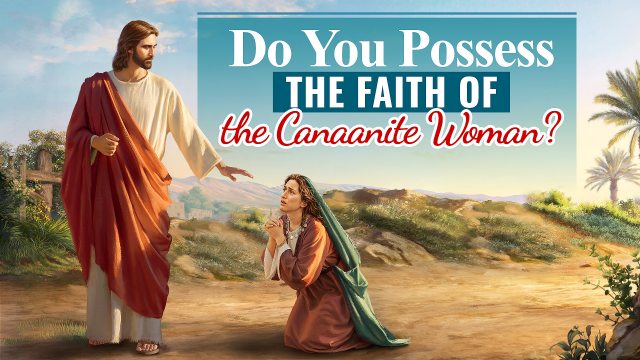
Encounter of Jesus with the Canaanite woman (Mt 15:21–28)

The Gospel of this Ordinary Sunday invites us to respond to the call of Jesus with extraordinary faith in the poor Canaanite woman. In this Gospel, Jesus encounters a Canaanite woman who begs Him to cure her daughter. Jesus initially refuses her request by saying, “It is not right to take the children’s bread and toss it to the dogs”. At first sight, Jesus' reply to this needy woman seems to be insulting and humiliating one but if we look at the background of the text, the Lord’s heart for the mission for the Gentiles will become apparent.

Let's look at some background material such as historical and literary context.

The encounter of Jesus with the Canaanite woman occurs only in two of the synoptic Gospels; Matthew and Mark. According to Matthew’s narrative, Jesus left Israel and entered Tyre and Sidon, which was Gentile territory. Jesus went there and he began to curse for the hard heart of less conversion. At that time, the woman meets Jesus both the Gospels affirm that she was a Canaanite woman.


Who are the Canaanites? Canaanites are those who were living in the promised land from the time of Abraham. Their history goes more than 5000 years ago, in the time of prophets, Canaan was also the object of the Lord’s anger as prophets always prophesied, “There is a word of the Lord against You, O Canaan, land of the Philistines” (Zeph 2:5) In this context of the regret and anger over the gentile nations, Jesus meets the woman. The Gospel of Mark says that she was a syro- Phoenician woman Syrophoenician means mixed race of Syrians and Phoenicians or Syrians who lived in Phoenician. (mixed race of Syrians or phonicians). But one thing is clear, she was a woman who was a gentile ignored by the Jews. 

Jesus’ calling woman a dog should not be taken in the literal sense. Jesus did not call her in the singular, but used the plural: “dogs”. Actually, gentiles were considered “dogs.” The book of Leviticus chapter 11 explains that gentiles were not allowed to enter the temple because of their impurity to offer sacrifices at the temple, they were considered unspiritual so to refer to an “unclean” animal. Jesus did not refer to Canaanite woman individually but used a general figure for all Gentiles. 

If we look at the original language of the text, Jesus used a different term to refer to the dogs here, in Greek, was kunarion, meaning “small dog” or “pet dog”. Usually, in the Bible, gentiles were called by the Jews by kuon ‘wild and stray dogs’ (Mt 7:6; Lk 16:21; Phil 3:2). Of course, gentiles are the dogs, but close to the heart of Jesus, they are concerned by Jesus. So, according to both the context and language involved, Jesus wasn’t referring to the Canaanite woman as a “dog,” either directly or indirectly. 

The response of Jesus should not be understood as if Jesus is not willing to heal her. It is not a matter of food; it is not a matter of different people; it is a matter of time; when to feed the children; when to feed the dogs. The v. 24 will identify the children with Israel and the dogs with the Gentiles. Mark gives additional truth, Mark 7: 27 - “Let the children eat first,” the children are fed first; later the dogs receive the scraps. the relativizing πρῶτον. The issue is no longer the leftovers of the children’s food that the dogs receive later. The people are different; the food is the same. In the Gospel, food refers to salvation. Salvation is available for all. Israel are the first-born children, and the Gentiles it is distributed later. 

The faith is the great issue here. In Matthew series of 3 verbal forms are used (came up, bowed down, said), there is also another meaning of prosekynei can mean “worship” the woman perceives Jesus’ divine nature. She is bowing down in a gesture of worship. Matthew is adding one more piece of information, the When the Canaanite woman approached and repeatedly asked for healing, the disciples were annoyed and asked Jesus to send her away. Jesus acknowledged her faith—calling it “great” —and granted her request (Matthew 15:28) which he could not recognize in the disciples whom he rebuked always for their little faith. He wasn’t using in a humiliating way, but rather testing the faith of the woman and teaching an important lesson to His disciples. 

The verse 24 is typical Matthean verse, “I was not sent only to the lost sheep of the House of Israel” Who are the lost sheep of the House of Israel? In the Gospel of Matthew, They were the sinners, tax collectors, prostitutes, and oppressed among the Jewish people. For Jesus said, “I did not come to call the righteous, but sinners” (Mt 9:13). Jesus is sent for this purpose, to welcome the tax collectors, prostitutes, and unclean people. 

I would like to summarize the Gospel: analyzing the Gospel geographically and literally we come to know that Jesus in no way used the words to insult/offend the poor Canaanite woman, but rather to test the faith of the Canaanite woman and by that teaching the disciples who always had little faith in Jesus. Salvation comes to the people of Israel and it does not mean it is close to the Gentiles, Jesus is sent to the lost sheep of Israel the sinners and tax collectors. 

At the beginning of the Gospel of Matthew, “Do not enter in any city of the Samaritans; but rather go to the lost sheep of Israel.” (Mt 10:5-6) Canaanite woman’s faith is a reward to all of us that God’s family is about to expand Israel to include ‘all nations. Mt 28:19 “Therefore go and make disciples of all nations, baptizing… Faith can move the mountains. Jesus is expecting the same faith from each one of us at the time of COVID-19, let us not be discouraged like the disciples often showing their little faith, rather let us challenge Jesus with our strong faith and prayer. 


1 Kings 11:4-13 and Mk 7:24-30

During the Academy Awards of Hollywood Movies, Chris Rock, a famous comedian while hosting the show, Will Smith walked onto the stage and slapped Chris in front of the Media. It was because he was joking about the appearance of Will's wife. The amazing thing was, How Chris handled that incident of insult and humiliation.

Today's first reading and the Gospel are teaching us How to react in those situations where there is a confrontation of the Lord with reason. (of insult and humiliation). 

In the First reading, The Lord is angry (only a few times in OT, do we read the Lord takes away his anger when Moses and Aron speak in favor of people). Here the Lord is angry with the reason because Solomon and his family turned behind other gods, idols and dedicated temples for their gods. 

The Lord is confronting a SyroPhonician woman with reason (some may think it might be an insult who reads the text literally) Here the issue is not food or persons, but when to eat? children eat first and the Gentiles eat next. the sacristans/altar servers first and you next. 

In front of the confrontation of the Lord, insults/humiliation, let us not be violent or discouraged, not like Solomon, but let us challenge the issues with our faith like the woman, 'Even the dogs eat under the table"

Every day the Lord is confronting us with reason, and we need to respond with our faith. Our faith has to undergo trials in order to go to the next stage.  

Food is available for everyone on the table. Criteria is sola fidei. One who responds with faith will be saved. 


Fr. Rajesh

Popular Posts